
Plumbing an Outdoor Shower at a Beach House
An outdoor shower is mostly a drainage job with a showerhead on top. Feed it from branches you can shut off by themselves, give the rinse water somewhere to go that sand cannot choke, and pick metal that holds up in the air near the ocean. Get those three right and it stays the nicest fixture at the house.
If your house has an outdoor shower, or you keep wishing it did, you already know why: nobody wants to carry the beach through the living room. The idea is simple. The plumbing behind it has more choices than people expect, whether it is a new shower off a lanai in Lanikai or an old one in Kailua town that has started dripping, draining slow, or crusting over. The choices that cause trouble later usually get made in one afternoon with a kit from the hardware store.
Cold only, or hot and cold
Plenty of rinse showers run cold only, and for knocking sand off your feet that is fine. One cold line teed off near an exterior hose bib is the simplest version we build. It gets more involved once people want to actually shower out there, wash a kid’s hair, or rinse a wetsuit with something warmer than whatever has been sitting in the pipe.
Hot water means a branch from the water heater side of the system, run to that outside wall, into a mixing valve that stays balanced when someone flushes a toilet inside. That valve matters more outdoors than in a bathroom, because an outdoor shower often sits at the end of the longest run in the house, where pressure swings hit hardest. We use a pressure balancing valve rated for exterior use. Two hose bibs with a showerhead between them will scald somebody eventually.
Distance from the heater also decides how long you stand there waiting. All the cold water in that run has to clear before the hot shows up. If the shower is on the far side of the house from the heater, we talk through that wait before we run the line.
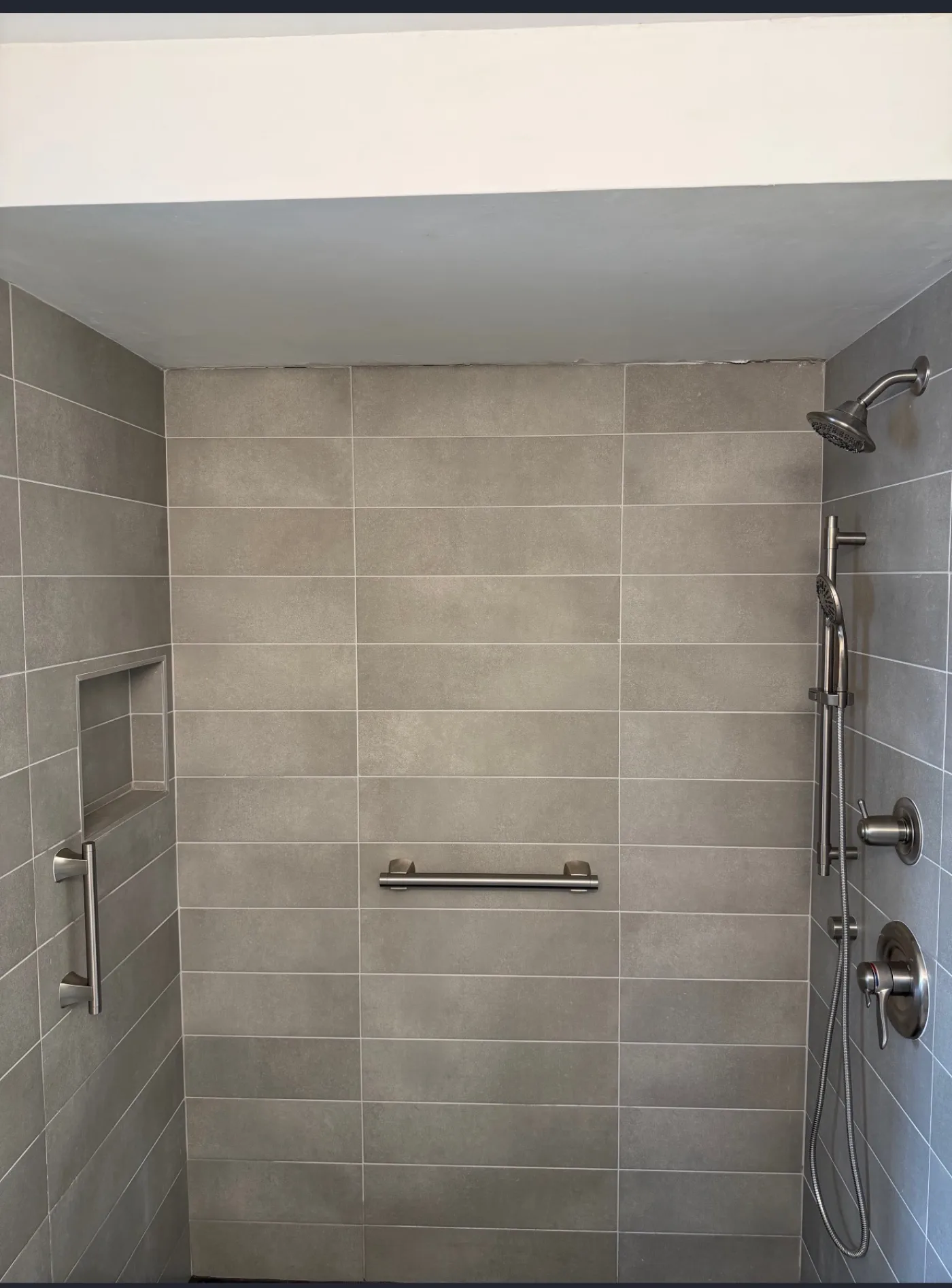
Where the rinse water ends up
This is the part the kits skip. A paver pad or a wood deck with no plan for runoff sends water under the house, against the foundation, or toward the neighbor’s yard, and none of those end well. Water pooling against a wall for a few years is how a small shower turns into a much bigger call.
There are two broad ways to handle it. Some outdoor showers drain to a gravel bed or dry well set away from the house and sized for the flow. Others tie into the building drain through a trap, the same as any fixture inside. Which one fits depends on your soil, where the shower sits, and what the permit allows for that setup, so we sort that out before anybody digs.
Slope matters on either version. A pad pitched even slightly the wrong way holds a puddle against the post every afternoon, and standing water is where mildew and rot get started.
Sand will get in, so plan for it
You can hang a boot brush at the gate and put a sign on the post. Sand still goes down the drain, because rinsing it off is the whole reason the shower exists. Every rinse sends a little more of the beach toward the trap.
So we set these drains up to be cleaned, instead of hoping they stay clear. That means a removable strainer or grate that catches the bulk of it, a trap you can get at, and a cleanout close to the shower so a cable or a jetter can reach the line without going through the house. A line with no way in only gets harder to clear each year.
If an existing outdoor shower drains slower every season, that is almost always the story. Our Kailua drain cleaning page explains how we clear a line packed with grit and when a camera is worth running to see whether the pipe itself is damaged. Once it is clear, dumping the strainer every few weeks does most of the upkeep.
A shutoff you can find with wet hands
Every outdoor shower should have its own shutoff valves, somewhere you can reach without crawling under the house or hunting for the main. Outdoor fixtures get bumped by surfboards and leaned on by kids, and a connection that lets go outside can run for hours before anybody notices, because the water just soaks into the yard.
We put isolation valves on the hot and cold branches in an access panel or a covered box near the shower wall. Close them and the shower is out of the system while the rest of the house keeps working. That is the difference between a quick repair on a Saturday and shutting off water to the whole family while you wait for us.
Those valves help with a quiet leak too. If the water bill creeps up and you suspect the shower, close its valves and watch the meter. If the dial stops, you have your answer. If it keeps moving, the leak is somewhere else, and our leak detection work in Kailua is how we find it without opening more than we have to.
Fittings that hold up near the ocean
Salt air works on exposed fixtures and connections, and an outdoor shower is nothing but exposed fixtures and connections. Cheap plated trim pits and flakes. Plain steel screws rust and streak the wall below them. Bare brass turns green and crusty around the threads, which is right where a slow drip likes to start.
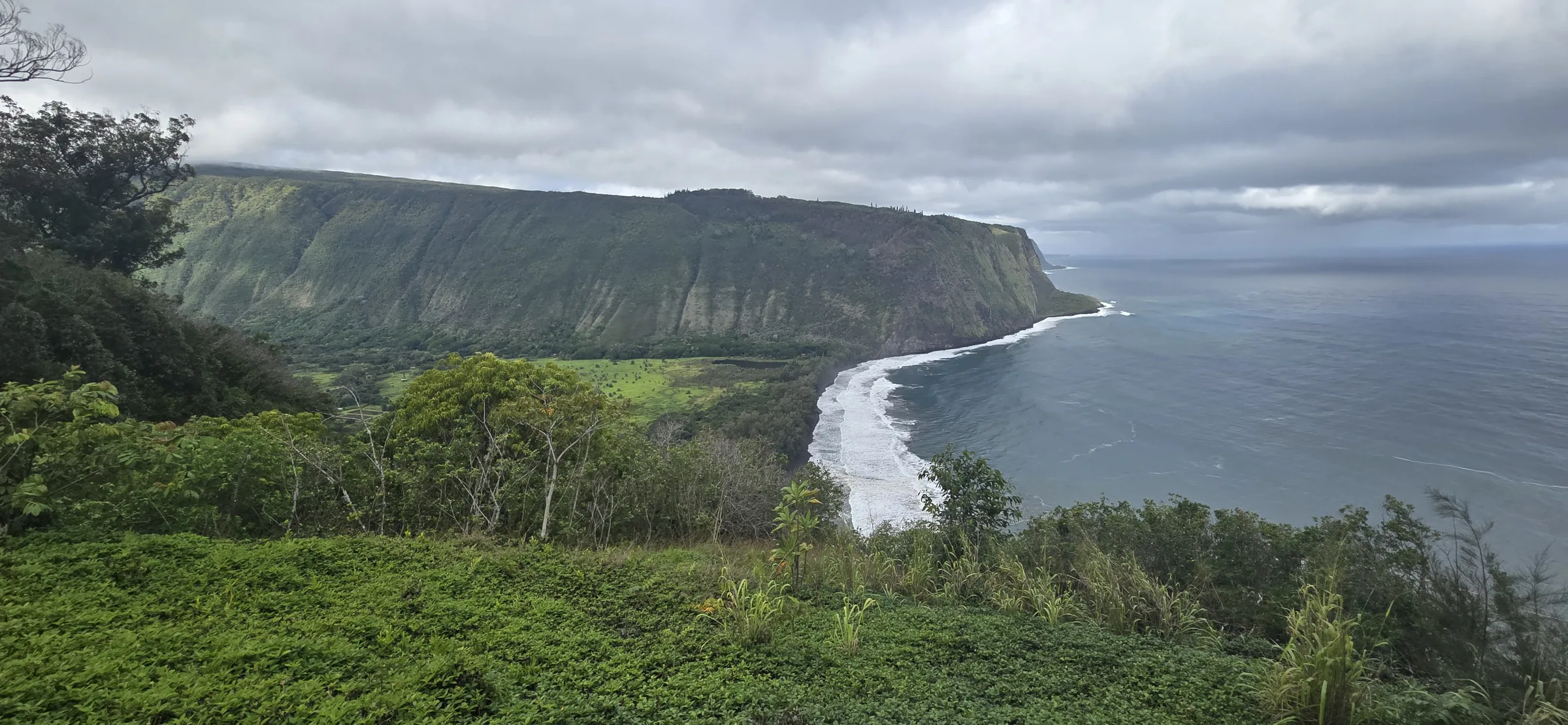
For a shower that lives outside, we lean toward solid valve bodies and trim meant for exterior exposure, stainless mounting hardware, and supply lines kept inside the wall or a chase instead of strapped along the outside of a post. The less pipe the air can touch, the longer everything stays tight. To see how exterior trim looks mounted on a finished wall, look through our gallery.
Outdoor shower questions we hear
Can you add hot water to a cold-only outdoor shower?
Usually, yes. It means running a hot branch to that wall and swapping the cold fitting for a mixing valve that stays balanced. How much work that is depends on where the water heater sits and how easy the wall is to get into, which we can tell you after a look.
Why does our outdoor shower back up after beach days?
Sand. It settles in the trap and the low spots of the drain line, and every rinse adds another layer until water stands on the pad. Clearing the line fixes it for now. A strainer and a cleanout near the shower keep it from coming back every season.
What should we do if it keeps dripping after the handle is off?
Close the shower’s own valves if it has them, or the main if it does not, and give us a call. A drip that keeps going after the handle is off is usually a worn cartridge or washer, and outside, salt air tends to speed that wear along.
An outdoor shower should be the easiest fixture you own. Plan the water in, the water out and the valves you can reach, and it mostly is. If yours needs work, or you want one added, send us a photo of the wall and we can talk it through.
Adding an outdoor shower in Kailua?
Send us a photo of the wall and where you picture the water draining, and we will tell you what it takes, including where the drain can actually go.