
Steady hot water again for Pearl City’s longtime homes.
Is your heater old enough that you have stopped counting? We tell you straight whether it is worth fixing, then size and install the right tank or tankless unit and take the old one with us.
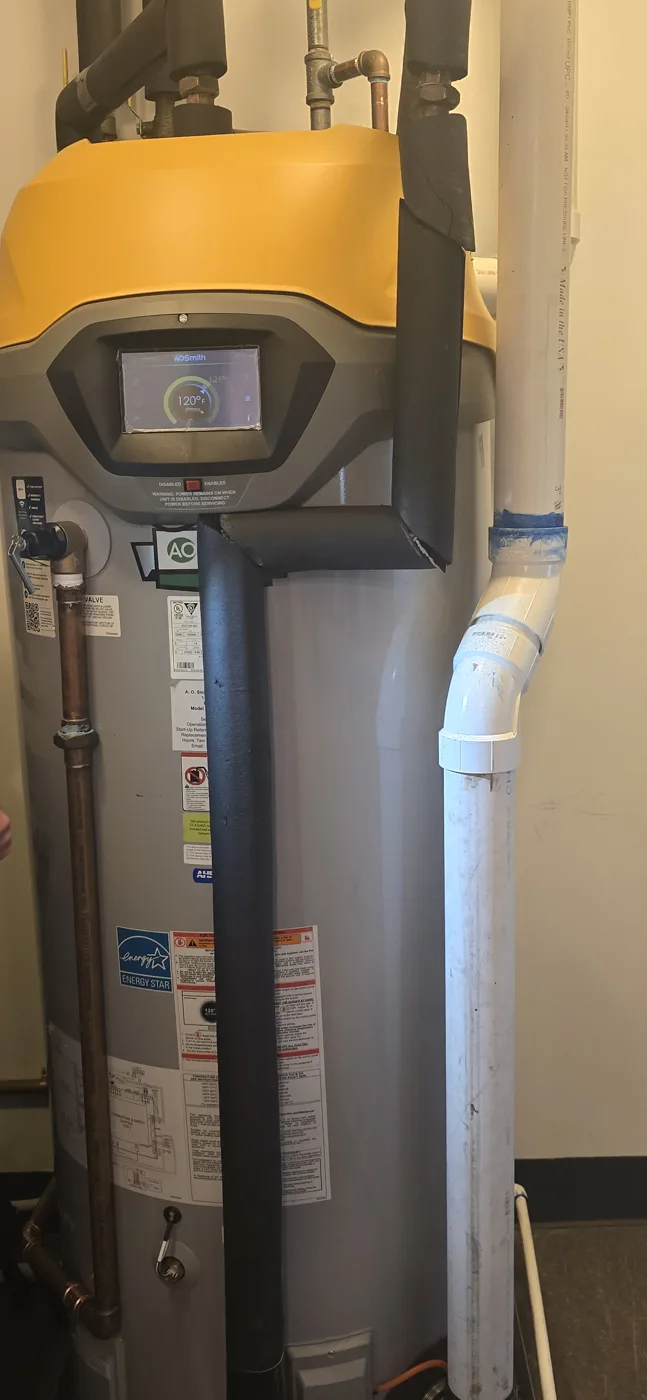
Age
When the shower goes lukewarm and the tank starts to knock.
In a town full of homes lived in for decades, an aging water heater is one of the calls we take most often.
Rust in the hot water is the heater telling you what the inside of the tank looks like.
Most heaters give warnings before they give out. The first one is usually temperature: the shower that used to stay hot now fades halfway through. Then comes the noise. Minerals settle to the bottom of a tank over the years, and the burner or lower element ends up heating through that layer. You hear it as popping, rumbling or a knock when the heater fires, and it works harder to hand you less.
Rust-colored hot water, when the cold runs clear, points at the tank itself. So does a damp spot or a slow drip at the base. Past the ten-year mark, any of those deserves a look soon, before it turns into a wet floor.
Start my fix“John responded quickly. He was very nice and professional. He arrived on time, assessed and fixed our plumbing issue quickly.”
Verdict
A new part, or a new heater?
We do not show up planning to sell you a heater. Plenty of lukewarm-water calls come down to one failed piece: an element, a thermostat, a gas control, a dip tube. On a heater with years left in it, we replace that part, test it and leave you with hot water the same visit.
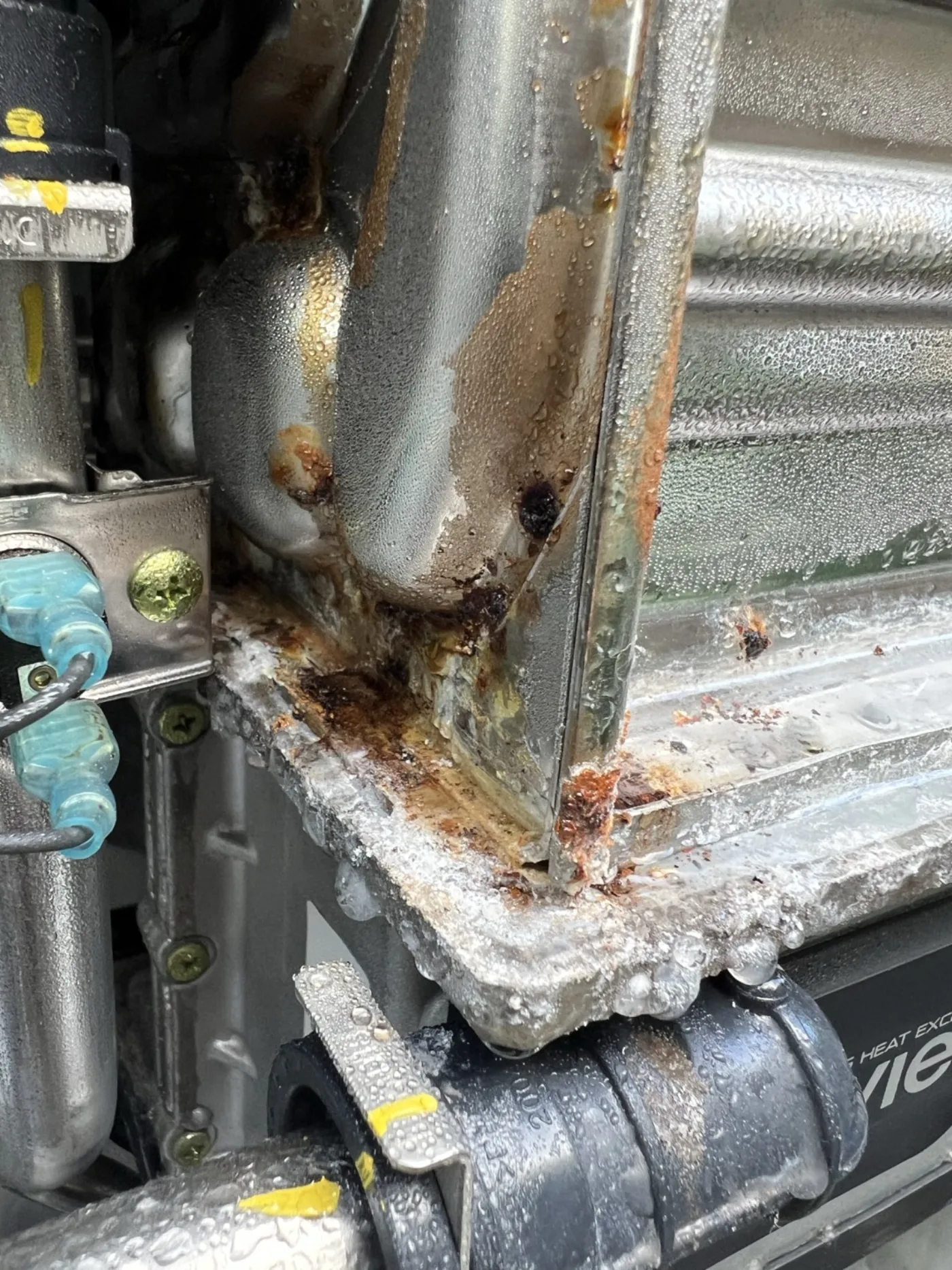
The answer changes when the heater itself is worn out. A tank leaking from its body cannot be repaired, full stop. An older tank that rumbles, puts rust in the water and has crusted fittings on top will take a new part and then find the next weak spot. Tankless units age too, just out of sight, and when corrosion gets into the heat exchanger the fix is usually the whole unit.
So the visit starts with finding the real cause. You hear what we found in plain words, along with a clear price for each option, and the quote is the price. If repair is the honest answer, that is what we tell you.
Tank or tankless, and what each one asks of the space.
A standard tank is the simplest swap. It keeps a supply hot and waiting, handles a big draw well and then needs time to reheat. It fits where the old tank sat, as long as that spot has room for the straps, the relief line and, on a gas model, proper venting.
A tankless unit heats water as it passes through and never runs dry, but it can only heat so much at once. It hangs on a wall, which frees up floor, and a gas model needs its own venting plus a gas line sized to feed it. That line also serves your range and maybe a dryer, and it was sized for the old heater, so we check it before you decide.
A heat-pump water heater is a tank with a small heat pump on top. It pulls heat out of the air around it, which makes it very easy on electricity, and it asks for more from the room: open air around the unit instead of a tight closet, a place to drain condensate and the right electrical circuit. The room also runs a little cooler while it works, so a spot you use every day is worth a second thought.
We look at where your heater lives now and what that space can support before recommending any of the three. Tell us where your heater sits and what powers it, and we will start from there.
Sized to the people in the house.
Square footage matters less than habits. Picture the busiest stretch of hot water in your home. For a couple it might be one shower and a dishwasher. For a bigger household it can be back-to-back showers while the washer runs a hot load and someone fills a tub.
That stretch sets the size. Too small a tank and the last shower runs cold. Too small a tankless unit and the water cools the moment a second tap opens. We ask who lives there and how the mornings go, then match the heater to that.
Expansion tank, straps, permit, and the old heater hauled off.
Every install includes the pieces that keep it safe. Heated water grows in volume, so a small expansion tank on the cold side gives that pressure room instead of letting it lean on your valves. Seismic straps anchor the heater to the framing, and the relief valve gets a discharge line that ends where it should.
Filing the permit is our job. The old heater goes out on our truck the same visit, and the floor where it stood is cleaned before the new one goes in.
From the first look to the first hot shower.
A licensed plumber does the work to code under Hawaii license #37423. New supply connectors and a working shutoff go in; we do not reuse tired ones. On gas units, venting and clearances get checked before the burner lights.
Once the heater is hooked up, we let it fill, open the hot taps until the air stops spitting and wait while it comes up to temperature. Then you run a faucet yourself. We show you where the shutoff is, what the temperature is set to and what to watch for as it ages. We clean up before we leave, and if anything about the install is not right afterward, call us and we come back and make it right. You can see finished jobs in our gallery of recent work.
Pearl City calls that often begin at the water heater.
A heater leaking from the bottom and soaking the floor is a job for emergency plumbing. Shut the cold valve on top and call. If the water bill has crept up with nothing visibly wet, leak detection finds the source before any wall gets opened.
Older lines that drain slower every month go to drain cleaning. When the original supply pipe keeps springing leaks in new places, the answer may be repiping in Pearl City, and some owners handle the pipe and the heater in the same season.
From the residential neighborhoods up toward Pearl City Heights, we’re a short drive away and glad to make it. More on our work around town is on the Pearl City page, and our island-wide water heater installation page explains how we handle this work everywhere else.
Not sure what your heater is doing? Describe it however it comes to you. Send us the details or call (808) 445-3585.
Pearl City water heater questions, answered plainly
Our heater is past ten years and only gives lukewarm water. Repair or replace?
That depends on what we find inside it. Lukewarm water can come from one failed element, thermostat or gas control, and on a heater with life left that is a repair. When an older tank also rumbles, puts rust in the hot water or is damp at the base, new parts rarely buy much time. We look first and tell you which one you have.
What does a heat-pump water heater need from the space around it?
Air and room. It pulls heat out of the surrounding air, so it wants open space around it instead of a tight closet, and the room runs a little cooler while it works. It also needs a place to drain condensate and the right electrical circuit. We check all of that before we suggest one.
Would a tankless heater work in our house?
It can. A tankless unit never runs out, but it only heats so much water at once, so it has to be sized for the busiest few minutes in your house. A gas model also needs proper venting and a gas line big enough to feed it. We ask how your household uses hot water before recommending one.
How do you work out what size heater we need?
We ask who lives in the house and what runs at the same time: back-to-back showers, the washer, the dishwasher, a deep tub. That busy stretch, more than the size of the house, decides the tank size or the flow a tankless unit has to keep up with.
Why does a new heater come with an expansion tank and straps?
Water grows in volume as it heats, and on a closed system that extra pressure needs somewhere to go, so a small expansion tank on the cold side takes it. Seismic straps keep the heater anchored to the framing. Both are part of installing it to code.
Do you pull the permit and take the old heater away?
Yes to both. The permit is ours to file under Hawaii license #37423, and the old heater goes out on our truck the same visit the new one goes in.
Your heater
How old is the heater, and what is it doing?
Give us a rough age, whether it runs on gas or electric, where it lives and what changed. We will set a visit from there, or you can call the crew at (808) 445-3585.