
The Pearl City water bill that keeps climbing, traced to its source.
Nothing looks wet and the bill still goes up. We test, listen and narrow it to one spot, so the opening stays small and the repair follows right behind it.

Proof
“Paul quickly identified my toilet was leaking from a failed wax seal which was not visible to me. He fixed it immediately.”
Arianna M., Yelp
Most hidden leaks go the way that one did. The water is going somewhere you have no way to see, and the job is finding it with care before anyone picks up a saw. Once the source is found, the fix tends to be the easy part.
The water bill that climbs while every floor stays dry.
It usually starts with a bill. Nobody new moved in, nobody put in a garden, and the number keeps creeping up. You check under the sinks and around the toilets and everything is dry. That is the frustrating kind of leak, and it is a common one in homes that have been lived in for a long time.
A dry floor and a climbing bill mean the water is going somewhere you cannot see.
Water that leaves a supply line has to go somewhere. Inside a wall it can soak into framing and insulation for a long while before any paint bubbles. Under a floor it can drain away into the ground. Outside, the line between the meter and the house can leak into soil that never looks wet on top.
Before you call, rule out the simple things. Listen for a toilet tank refilling when nobody flushed. Check that every outdoor faucet is closed tight. If all of that checks out and the bill keeps rising, the meter is the next stop.
Original water lines, and the places they give out first.
Plenty of Pearl City homes still run on their original water lines. Pipe that has carried water for decades rarely fails everywhere at once. It gives out at its weak points.
Joints and fittings are the usual first spot, where two pieces meet and have warmed and cooled with every shower for years. Hot-water lines tend to wear ahead of cold ones, and so do the spots where a pipe rubs a stud or passes through a wall.
Under sinks and behind toilets, the connections and stop valves age out on their own schedule. The lines at the water heater take heat every day. Outside, the run from the meter to the house works underground where nobody sees it.
One leak on an old line is a repair. Once they keep turning up one after another, patching each one stops making sense, and we will tell you so plainly and talk through repiping as the alternative.
Meter
Read the meter first, then narrow it to one spot.
The meter tells you whether water is leaving the pipes at all. Turn off every tap, and make sure the washer, the dishwasher and any ice maker are idle. Read the meter and write the number down. Then leave all the water off for a while and read it again.
If the reading moved, water went somewhere while the house was shut down. Many meters also have a small low-flow indicator that turns with even a slow drip, so watch that too. If the meter held perfectly still, the leak you suspect may be on a drain, or at a fixture that only leaks while it runs. That is where shower valves come in.
Once a leak is confirmed, we split the house into sections. Closing valves one group at a time tells us whether the loss is on the hot side, the cold side or the line outside. Then we put the suspect section under pressure and use listening equipment to follow the sound of escaping water through the wall or floor to where it is loudest. On hot lines, a thermal camera can pick up the warm streak where water is traveling.
You see the spot before anything gets cut. We mark it, tell you what kind of pipe is likely behind it, and give you the quote for the opening and the repair.
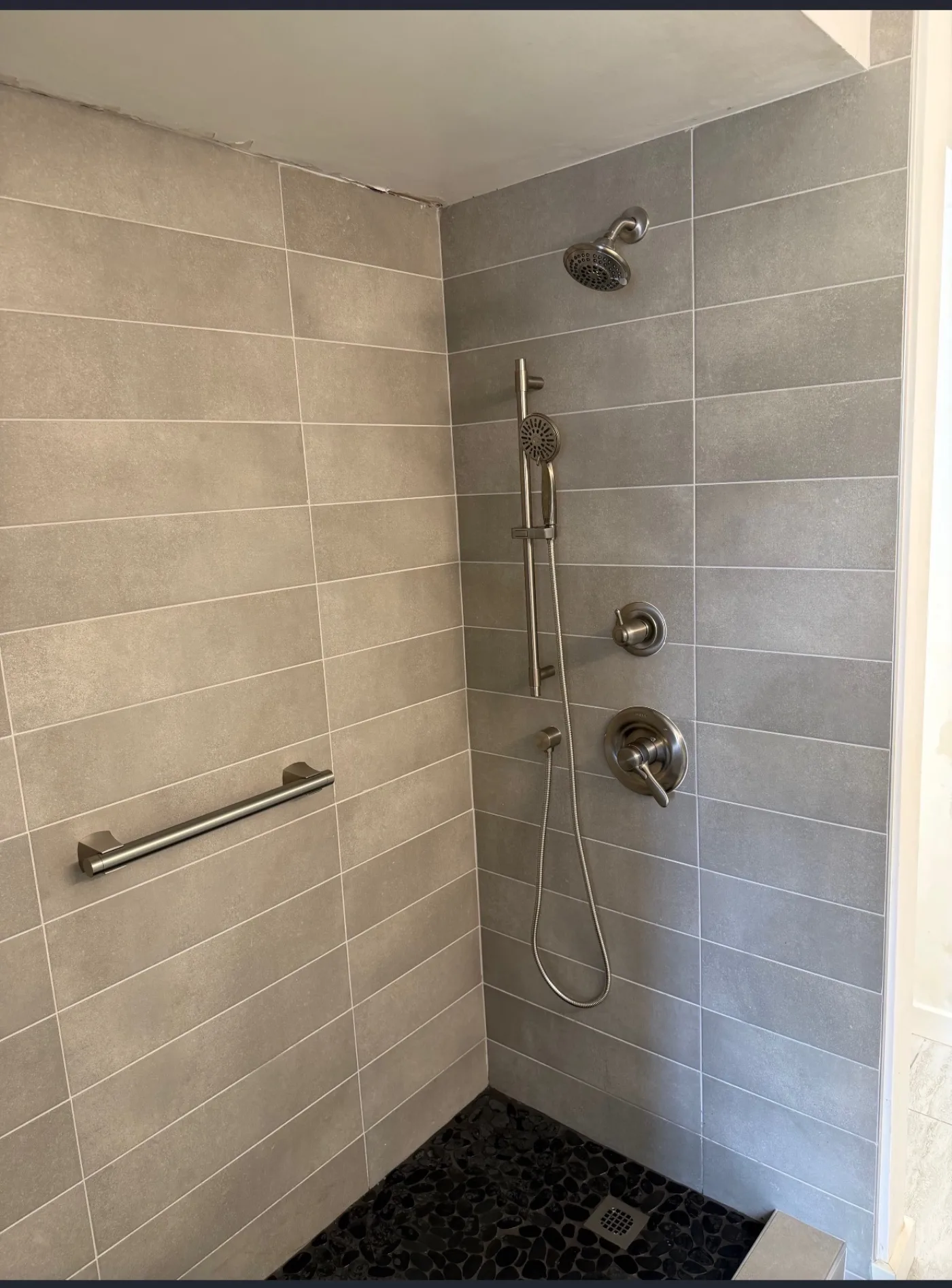
Shower valves and shower pans hide leaks behind finished tile.
The shower is one of the most common hidden sources we find, because both of its weak points sit behind tile. The valve body in the wall has connections on the hot line, the cold line and the pipe up to the showerhead. A slow drip at any of them runs down inside the wall only while the shower is on, which is why the meter test can come back clean.
The pan under the shower floor is the other one. If the waterproofing under the tile or around the drain has failed, water gets under the floor every time someone showers. Watch for loose or darkened grout at the base, a musty smell, a stain on a ceiling below, or soft flooring just outside the shower door.
We test the two separately, running the valve with the drain closed off and checking the pan on its own, so you know which one it is before any tile comes up.
A small opening, and the repair right behind it.
Because the spot is marked first, the opening is sized to the job, usually one tidy cut in drywall or a few tiles right over the break.
A licensed plumber makes the repair to code. On a pinhole or a failed fitting that means cutting out the bad section and putting in new pipe. On a shower valve it can mean replacing the valve body while the wall is open. Then we put the line back under pressure, watch the meter and clean up before we leave. If anything is not right afterward, we come back and make it right.
The number you hear before we start is the number on the bill. John started this company because he wanted people to get the service they were promised, and that includes the price.
Leaks you can spot on a walk through the house.
Some leaks sit in plain sight. A toilet that rocks or leaves a stain around its base often has a failed wax seal, leaking a little with every flush out of view under the bowl. A tank that refills on its own when nobody flushed is losing water down the drain.
Look at the supply lines under the sinks, the hoses behind the washer and the connections on top of the water heater. Dampness, white crust or green staining at a fitting all point to a slow drip. Send us the leak or call the crew at (808) 445-3585.
Around Pearl City we also handle drain cleaning, emergency plumbing and water heater installation. There is more about our leak detection across Oahu, everything we do in Pearl City, and recent jobs from around the island.
Leak questions we hear in Pearl City
My water bill went up but nothing looks wet. Could it be a leak?
It could. Rule out a toilet that refills on its own and any outdoor faucet left cracked open, then do the meter test. If the meter moves with every tap off, water is leaving the pipes somewhere out of sight, and that is the time to call us.
How do I do the meter test myself?
Turn off every tap and every appliance that uses water. Read the meter, leave the water off for a while, and read it again. If the number changed, or the small low-flow indicator is turning, you have a leak. Tell us what the meter did when you call.
Where do older water lines usually leak first?
At the weak points: joints and fittings, hot-water lines, places where a pipe rubs framing or passes through a wall, and old stop valves under sinks and toilets. A single leak is a repair. When they keep turning up one after another, it is time to talk about repiping.
Could my shower be leaking even if the meter test passes?
Yes. A shower valve that drips inside the wall, or a pan that lets water under the floor, only leaks while the shower is running. Loose grout at the base, a musty smell or a stain on a ceiling below are the usual signs. We test the valve and the pan separately.
Will you have to tear open my wall?
Only as much as the repair needs. We confirm the leak and mark the spot with pressure testing and listening equipment first, so the opening goes right over the break. You see the spot and hear the quote before anything gets cut.
What happens after you find it?
A licensed plumber repairs the pipe, fitting or valve to code. Then we put the line back under pressure, check the meter again and clean up. If anything is not right afterward, we come back and make it right.
Schedule
Noticed a leak? Tell us what you found
Let us know what you are seeing, whether the meter moved, and how long the bill has been climbing. We will reach out to set up a visit in Pearl City, or call John’s crew at (808) 445-3585.