
The warm spot on your floor has a source.
Kapolei sits on slab, so a hidden leak announces itself through the concrete. We find where it is before anybody picks up a saw.
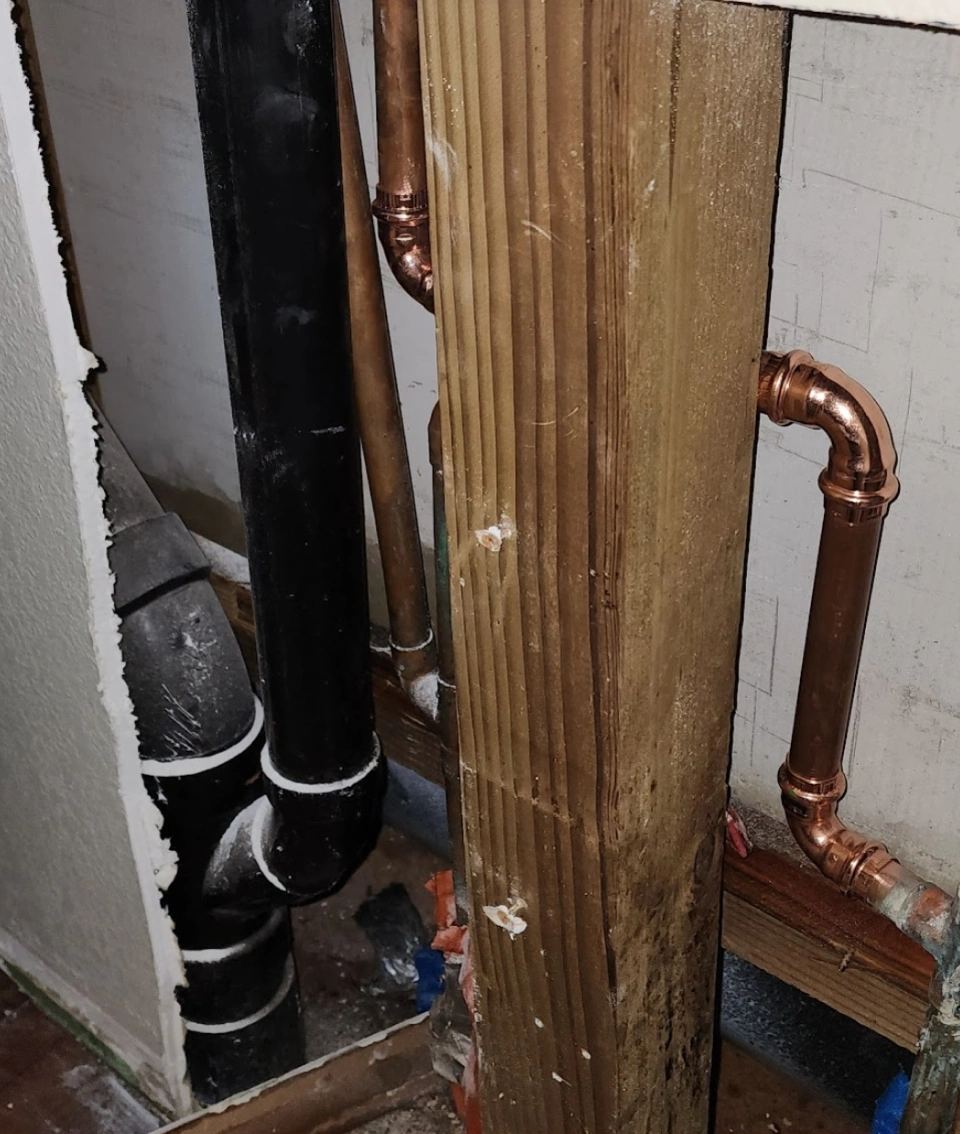
Why Kapolei leaks read differently
Slab houses tell on themselves, eventually.
Most homes across Kapolei sit directly on a concrete slab. No crawlspace, no basement, so the water lines feeding your kitchen and baths run through or under that concrete. When one gives up, the water has nowhere obvious to go. It works sideways through the fill, warms the floor above it, and shows up as something small and easy to shrug off.
The two calls we get most from Kapolei start the same way. Somebody walks barefoot down a hallway and notices one patch of floor is warmer than the rest, or the water bill arrives much higher with nothing at home having changed. A hot spot means a hot line is leaking under you, and a climbing bill means water is going somewhere it should not.
Other signs run quieter. Every faucet is off and you still hear water moving. Tile stays damp. A baseboard swells. Shower pressure drops for no reason you can name. None of these prove a slab leak alone, but stacked together they are enough to have somebody look before the damage spreads under your flooring.
How we locate it
Acoustic and thermal first. Concrete last.
Cutting a slab to go looking for a leak is the expensive way to be wrong. Much of the newer construction here uses post-tension slabs, with steel cables running through the concrete under real tension. Opening one of those blind is not something anybody should do. So we do not guess.
- Pressure isolation. The house comes off the meter, hot separates from cold, and we learn which side is losing water.
- Acoustic listening. Ground microphones pick up water escaping a pressurized line, and we walk it until the sound peaks.
- Thermal scan. A hot-water leak warms the concrete above it, and a thermal camera reads that straight off the floor.
- Line tracing. We map where the supply actually runs, which is rarely where the floor plan suggests.
- A marked spot. You get an X on the floor and an explanation before any decision about opening it.
Before we blame the slab
Sometimes it is not under the concrete at all.
Here is the part some companies skip. Plenty of leaks that feel like slab leaks are not. A toilet flapper seeping all night moves hundreds of gallons and never leaves a mark. So does a water heater pan draining quietly outside, a hose bibb dripping behind a shrub, or a pinhole in an attic line that soaks insulation before it reaches drywall.
We check those first because they are cheap to rule out. If your leak turns out to be a five dollar part, we would rather tell you that than sell you a detection job you did not need. When it truly is the slab, we say so plainly and show you what led us there. No theater, no scare talk about your foundation.
The way we work
We find it first. Then you decide.
You get the location, an honest read on whether it is one repair or a failing line, and a clear price before we touch anything. Nothing gets opened on a guess, and nothing gets opened without your say.
Start my fix“Paul quickly identified my toilet was leaking from a failed wax seal which was not visible to me. He fixed it immediately. Thank you so much.”
Kapolei, block by block
Pressure up the hill, irrigation out on the flat.
Kapolei is not one kind of neighborhood, and leaks follow the terrain. Up in Makakilo, houses lower on the slope can sit with static pressure higher than anybody would design for, and that works on fittings and valves until something lets go. So checking pressure and the regulator is part of a Makakilo visit. Fixing the leak without fixing the cause only buys you time.
Down on the flat, in the Villages and the tracts running toward Ewa, the story shifts to irrigation. A cracked irrigation lateral can soak ground for weeks while the meter spins, and the only clue is a bill and a patch of grass greener than the rest. We isolate the irrigation system from the house supply before anybody digs.
Related work: Repiping in Kapolei · Emergency Plumbing · Leak Repair. Not sure what you are dealing with? Tell us what is happening or call (808) 445-3585. You can also see recent jobs.
What the visit looks like
Straightforward, start to finish.
We start by listening to you. What you noticed, when, what the bill did. That narrows things faster than any tool, because you live there and we do not. Then we walk the house, check the meter with everything off, and work through the easy suspects before the hard ones.
Once we know where the water is going, you get the whole picture in plain words. Where it is, why it happened, what it takes to fix, and what it costs. The number we quote is the number you pay, which is the reason John started Shoreline in 2019 after watching another company do it the other way around. A licensed plumber does the work and cleans up before leaving.
Why Kapolei calls us
Honest, local, and licensed.
- The quote is the price. We hold the number we give you, with no surprise add-ons partway through.
- Licensed and accountable. Hawaii license #37423. If it is not right, we come back and make it right.
- A local Oahu crew. The plumber who pulls up to your Kapolei house lives and works on this island.
- We rule things out honestly. If your leak is a flapper and not your slab, you will hear that from us first.
- Detection before demolition. Nothing gets cut until we can point at the spot and explain why.
Kapolei sits about twenty miles from town, and plenty of companies treat that as a reason to show up late. We are out here regularly, so the west side is normal work for us, not a special trip. More about how we work, or see everything we do in Kapolei.
Questions, answered straight
Frequently asked questions
What does a slab leak feel like in a Kapolei house?
Usually a warm patch on the floor you notice with bare feet, most often in a hallway or near the water heater. Add a water bill that climbed with no change in habits, or the sound of water running with every fixture off, and it is worth a call.
Do you have to cut the slab to find the leak?
No. We isolate the line with a pressure test, then narrow it down with acoustic listening gear and a thermal scan. Concrete only gets opened once we can mark the spot, and on a post-tension slab that matters a lot.
Could my leak be something other than the slab?
Often, yes, and we say so. A running toilet flapper, a hose bibb, a water heater pan, a pinhole in an attic line, or a broken irrigation head can all move a lot of water. We check the simple things before we talk about concrete.
The water shows up in my yard, not the house. Can you find that?
Yes. Irrigation lines under HOA landscaping and lawn zones are a regular call out here. We isolate the irrigation system from the house supply so we know which side is losing water before anyone digs.
What happens once you find it?
We show you the spot, tell you honestly whether it is one repair or a sign the line is done, and give you a clear price before anything else happens. The number we quote is the number you pay.
Nearby on the west side
We cover the whole leeward stretch.
Other work we handle in Kapolei: drain cleaning · water heater installation · repiping · emergency plumbing.
Get on the schedule
Tell us what your floor is doing
Send the details and we will reach out to set up a visit in Kapolei. Or call John’s crew now at (808) 445-3585, we answer.