
Hot water that holds up in a Kailua beach-town house.
Past ten years and running lukewarm? We tell you whether it is worth repairing, then put in the right tank or tankless to code and haul the old one away.
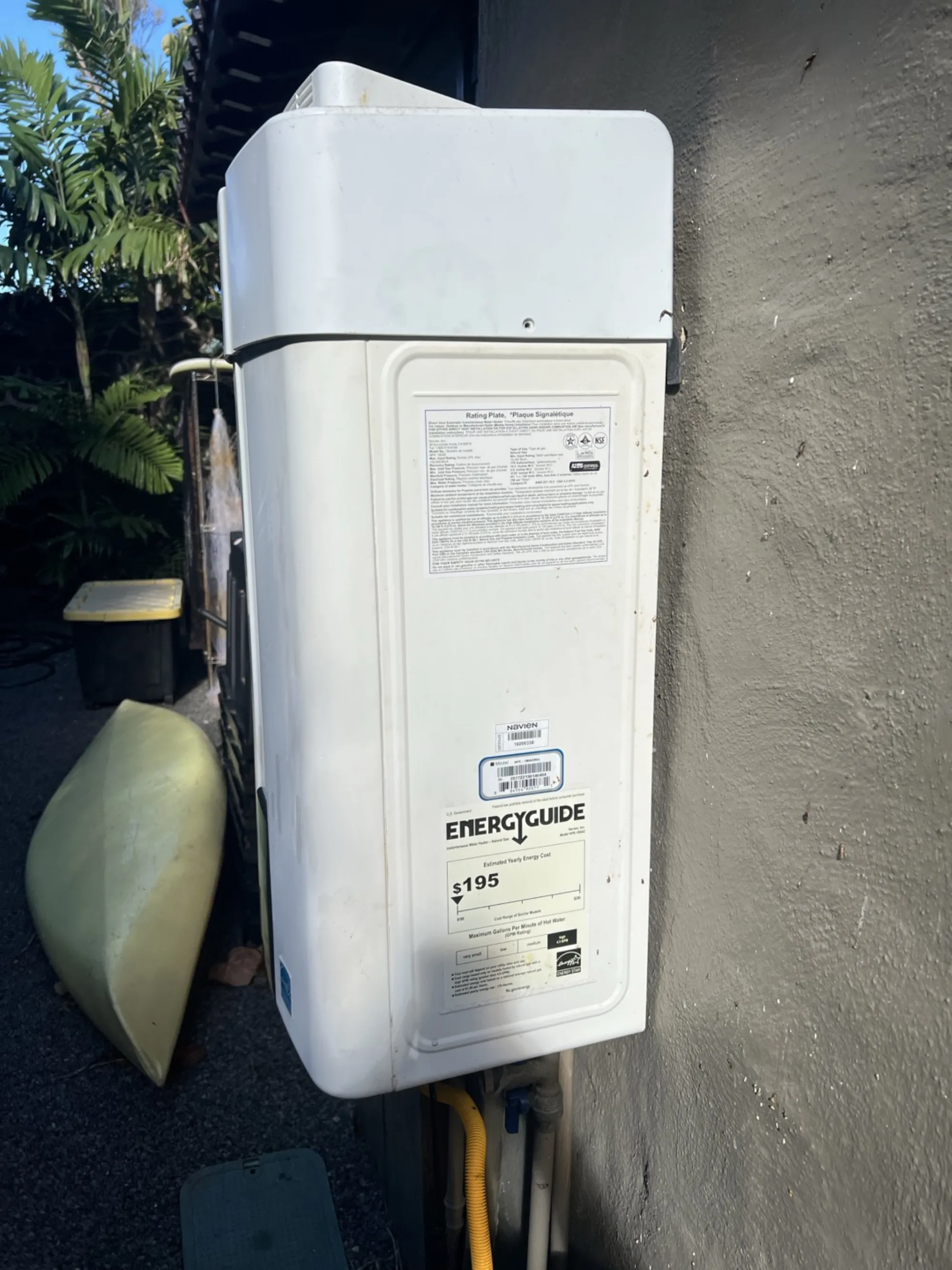
Age
Lukewarm, rumbling and past ten years.
That combination is one of the water heater calls we get most in Kailua, and it does not always mean buying a new heater.
A younger tank with one bad part gets a repair. An old tank wearing out all over gets replaced.
The rumble is usually sediment. Minerals settle to the bottom of a tank over the years, and the burner or lower element ends up heating through a layer of grit. You hear it pop and knock, and the heater works harder to give you less. Lukewarm water can come from that, or from one failed part: an element, a thermostat, a gas control.
On a heater a few years old, those are repairs, and we make them. Once a tank is past the ten-year mark and shows rust in the hot water, moisture at the base or crusted fittings on top, putting parts into it tends to buy a short stretch before the next failure. A tank leaking from its body cannot be repaired at all. We look, tell you plainly which side of that line yours is on, and give you a clear price either way.
Start my fix“John responded quickly. He was very nice and professional. He arrived on time, assessed and fixed our plumbing issue quickly.”
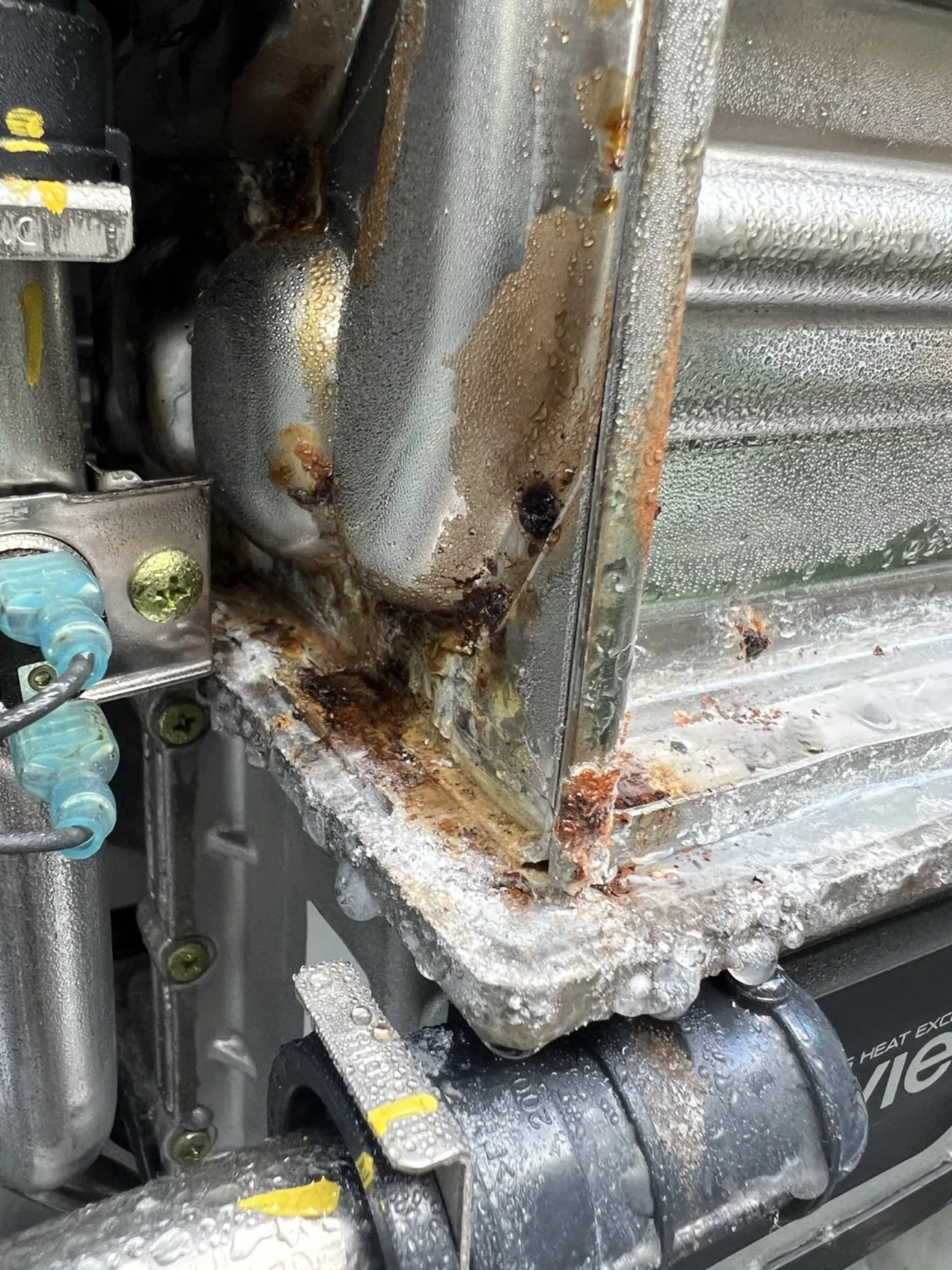
Salt
Salt air goes after the connections before the tank.
On an older heater in a beach-town house, trouble tends to start up top. The brass gets a crust on it, the flex connectors start to flake, and the shutoff valve seizes right when you need it. Salt air works on exposed fixtures and connections, and the top of a water heater is mostly those.
If your heater sits in a garage or carport open to the air, it takes more of that salt than one tucked in a closet. Tankless units usually go outside on purpose, mounted to an exterior wall so they exhaust into open air with no flue through the house. Before we pick the wall, we check for shelter from the weather, a way to bring gas and power over, room around the unit for service, and framing solid enough to hang it.
Wherever salt can reach the new heater, we use connectors built to stand up to it and keep dissimilar metals apart. The shutoffs go where a hand can actually get to them. Sometimes the heater still has years in it and only the hardware on top is shot, and then we swap the connections and leave the heater where it stands.
Tank or tankless depends on what runs at the same time.
Picture the busiest few minutes of hot water in your house. For some Kailua households that is one person rinsing off after the beach. For others it is two showers going while the dishwasher runs and a load of towels spins in the washer. That stretch decides the heater, far more than bedroom count does.
Tanks keep a supply hot and waiting. They cope well with a big draw, and once it is used up you wait while the tank reheats. Tankless units heat the water as it passes through and never run dry, but each one tops out at a certain flow. Put in one that is too small and the first shower turns cold the moment someone opens a second tap.
Moving to a larger gas heater raises a question most people have not thought about: can the pipe bringing gas to it keep up? That same pipe feeds your range and maybe a dryer, and it was sized for the old appliance. We check it while you are still deciding, so a line upgrade is part of the choice instead of a surprise on install day. Tell us what your heater is doing and who uses the hot water, and we will size it from there.
Every install carries the code pieces too.
Each new heater gets an expansion tank on the cold side, because heated water grows in volume, and on a closed system that pressure would otherwise lean on your valves and fixtures. It gets seismic straps anchored into the framing. The temperature and pressure relief valve gets a discharge line that ends somewhere safe where you can see it.
We fit new supply connectors and a working shutoff instead of reusing the old ones. On gas units, venting and clearances get checked before the burner ever lights. And the permit is ours to pull.
The old heater leaves with us.
A dead heater parked beside the house for a month helps nobody. Taking it away is part of the job, so it leaves on our truck the same visit.
The floor where it stood gets cleaned before the replacement goes down. After the new one is strapped and hooked up, we let it fill, open the hot taps until they stop spitting air and wait while it heats. Then you turn on a faucet yourself and feel the difference.
How a water heater visit goes.
We start by finding the real cause. Sometimes that ends the visit early, with a part replaced and a heater that has years left in it. Sometimes it ends with a straight talk about replacement. Either way, you hear the price in plain words before anything is touched, and it does not grow once the work starts.
A licensed plumber does the install to code under Hawaii license #37423. We show you where the shutoff is, what the temperature is set to and what to keep an eye on. If anything about the install is not right after we leave, call us, and we come back and make it right. Photos from past jobs are in our recent work around Oahu.
Windward calls that start somewhere near the water heater.
A tank that has let go and is soaking the floor needs emergency plumbing in Kailua, so pick up the phone for that one. Damp spots you cannot trace, or a meter that keeps moving with every tap closed, call for leak detection in Kailua.
Tubs and sinks draining slower every month are drain cleaning in Kailua. If the supply pipe itself keeps sprouting leaks around an older house, the answer may be repiping in Kailua.
Coming over the pali is a normal day for us, with regular jobs in Enchanted Lake, Maunawili and Kailua town. Everything we handle on the windward side is on our Kailua page, and the island-wide water heater installation page explains how we do this work everywhere else.
Still unsure? Describe what the heater is doing however it comes to you. Drop us a note or call (808) 445-3585.
Water heater questions from the windward side
My water heater rumbles and the water is only warm. Is it finished?
Not always. Rumbling usually means sediment has settled in the bottom of the tank, and lukewarm water can come from a failed element, thermostat or burner part. On a younger tank those are repairs. Past the ten-year mark, with rust in the hot water or moisture at the base, replacing it is usually the better call, and we tell you which one you have.
Should we get a tank or a tankless heater?
Think about the busiest few minutes of hot water in your house, not its square footage. A tank handles a big draw and then needs time to reheat. A tankless never runs out but has a ceiling on flow, so it has to be sized, with enough gas or power, for that busiest stretch. We ask how your household uses hot water and choose from there.
Can a tankless heater go on an outside wall near the beach?
Usually. We look for a wall with some shelter, framing that can carry the unit and a workable path for gas and power. This close to the ocean the salt is the bigger worry, so we pick connectors that resist it and mount the unit where its connections stay easy to inspect.
Why does a new water heater need an expansion tank?
Water expands as it heats. On a closed system that extra volume has nowhere to go, so pressure climbs and works on the heater, the valves and your fixtures. A small expansion tank on the cold side gives it room.
Do you pull the permit and strap the heater?
Both. Replacing a water heater requires a permit, and filing it is on us. Under Hawaii license #37423 we install to code, which means seismic straps, a relief line that discharges where it should and proper venting when the heater is gas.
What happens to my old water heater?
It leaves on our truck the day the new one goes in. Before we go, the floor where it sat gets cleaned and we run the new heater with you.
Start your fix
What is your water heater doing?
Give us the heater’s rough age, whether it burns gas or runs on electric, where it lives and what changed. We will set a visit from there, or you can call the crew at (808) 445-3585.