Kailua’s slow drains, cleared to the pipe wall.
Sand from the rinse-off shower and hair packed in the tub line. We clear the whole run, then show you what came out of it.
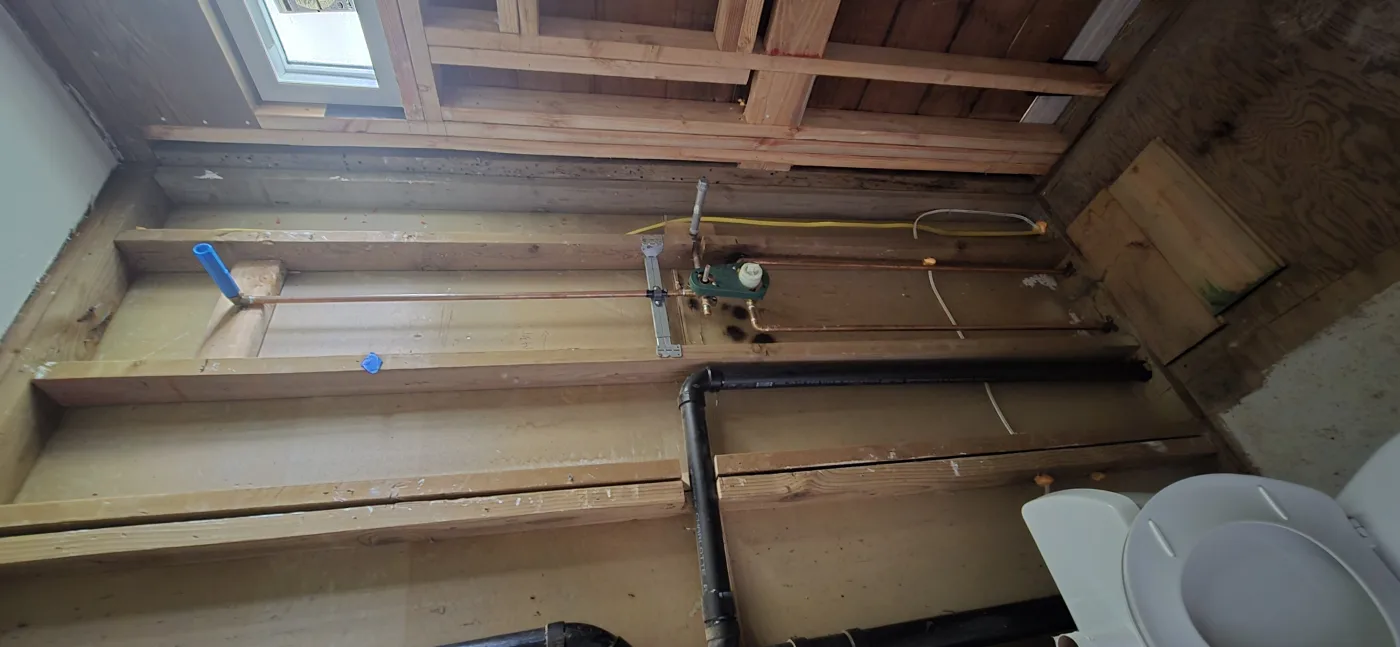
Sand
Beach sand has one place to go, and that place is the drain.
If your house has a rinse-off shower by the back door, it is doing exactly what it was put there for. The sand that comes off your feet goes straight down a small drain, and a lot of it stays there. Add the kids, the boogie boards and a dog that went in the water, and that little drain takes in more grit in a weekend than a bathroom sees in a year.
The sand that comes off your feet goes straight down a small drain, and a lot of it stays there.
Sand is heavy and it never dissolves. It drops out of the water at the first trap or the first low spot and sits. By itself it only takes up room. Mixed with soap film and a little hair, it packs into something close to wet mortar, and every rinse adds a layer. The drain slows over a few months. Then one afternoon the water stands around your ankles and stays.
The laundry does the same thing from inside the house. Beach towels and swim trunks carry more sand into the washer than anyone expects, and the washer pumps it into a standpipe that was sized for lint and soap. When a laundry drain starts spilling over during the spin cycle, sand in that line is one of the first things we look for.
Clearing sand properly is slow work. We pull it back out of the line instead of shoving it further down to settle somewhere harder to reach, and we flush the run afterward so the next rinse has a clear path.
Camera
A camera tells a clean line from a cracked one.
When a drain has backed up more than once, clearing it is only half the visit. Before we pack up, we run a camera down the line and look at the pipe itself. If your home has been standing a long time, its older lines can wear in ways nobody can see from the top of a floor drain.
The screen usually shows one of a few things. Round, clean pipe with water moving away from the lens means the trouble was whatever went into the line. A dip holding standing water means part of the run has settled. Fine root threads at a joint, or a crack running along the pipe, means the outside is working its way in, and the clog will keep coming back however well we clear it.
You are welcome to stand next to us and watch the monitor. We would rather you see the crack yourself than take our word for it, because a crack turns a clearing into a repair, and that decision belongs to you with the picture in front of you.
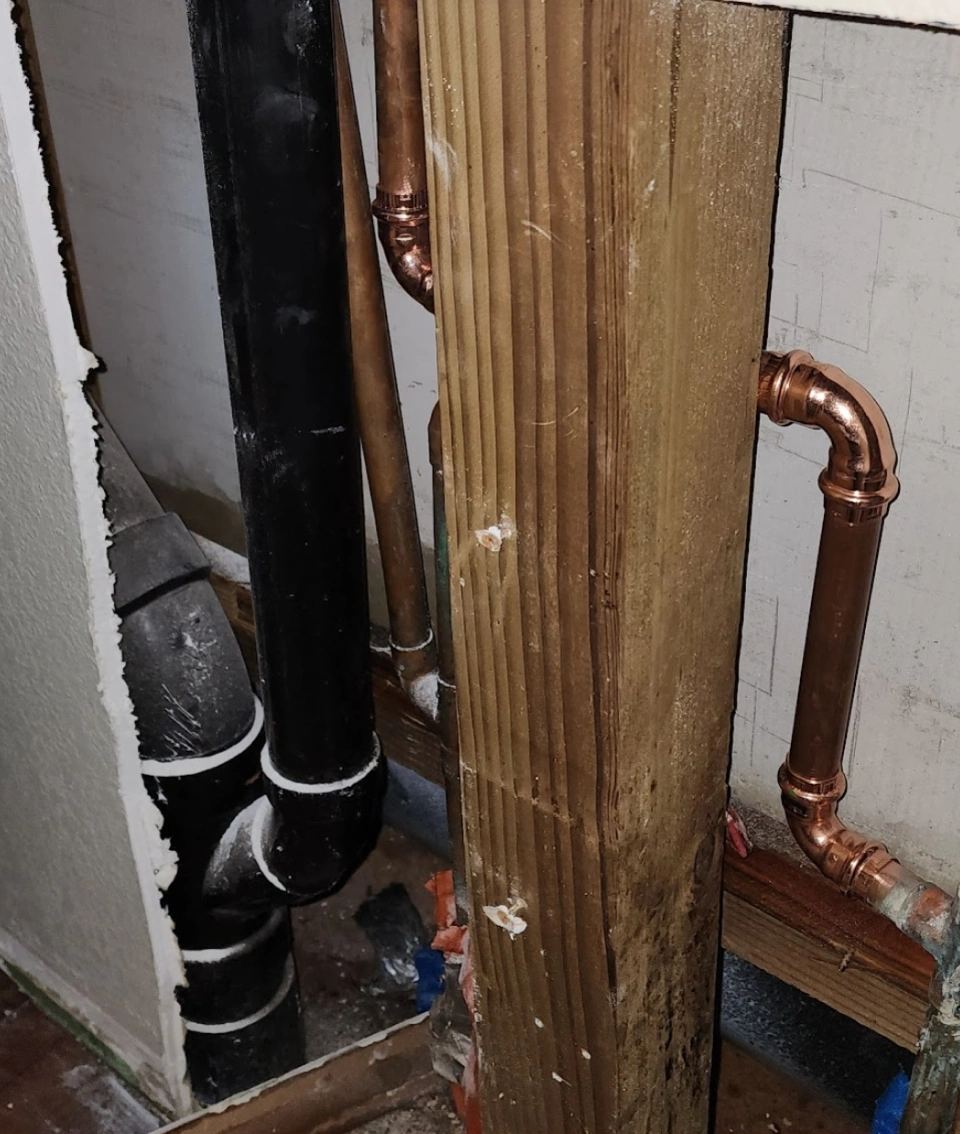
Hair and soap close the bathroom lines first.
Inside the house, the slowest drain is nearly always a tub or a shower. Hair wraps around the stopper linkage and anything else it can grab a few inches down. Bar soap leaves a film on the pipe wall, and in a house where people shower after every trip to the beach, that film builds fast. The film holds the hair, the hair catches more film, and the opening gets a little smaller every week.
Most of these blockages sit close to the fixture and come out clean. We pull the stopper, clear the trap and the pipe behind it, and run the water hard to prove it drains. If the same tub keeps slowing down every few months, tell us, because that pattern points past the trap.
When a cable does the job, and when the pipe wall needs water.
A drain cable is a spinning steel line with a cutting head. It bores through a plug and drags the material back, which suits hair, a wad of paper, packed sand near a trap, or roots that need cutting. For most household clogs the cable is the whole job.
Hydro jetting sends water at high pressure through a nozzle that sprays backward as it moves forward, scrubbing the full circle of the pipe. We reach for it when a line is coated end to end with soap scum or fine sediment, or when sand has spread along a long run and a cable would only cut a channel through the middle. What comes back on the cable decides it. Tell us which drain is slow and we will bring the right setup.
The quote you hear is the price you pay.
John started Shoreline in 2019 because the company he worked for did not do the work right, and he wanted people to get the service they were promised. So we find the real cause, explain it in plain words, and hold the quote.
Start my fix“Shoreline did a great job at less than a third of the cost of a competitor, and at the price they quoted. I’ll definitely use them in the future.”
What to keep out of the drains at a beach house.
Knock the sand off before the rinse. A few seconds of stamping on the grass sends most of it back to the yard. A basic strainer over the outdoor shower drain catches much of what is left, and emptying it takes a minute. That one change does more for the line than anything we can do on a service call.
Shake the beach towels out before they go in the washer. Anything that leaves sand on the laundry room floor is leaving it in the standpipe too. In the bathroom, a hair catcher in the tub drain beats every bottle on the store shelf.
In the kitchen, cooled grease goes in a can and leftover rice goes in the trash. Neither one washes away with hot water, and both stick to whatever is already on the pipe wall. Skip the chemical drain cleaners on any line that has backed up twice. They rarely reach a sand or grease blockage, and they leave us working in a pipe full of caustic liquid.
When we finish, we will tell you which of these actually matters for your house. You can look through recent jobs from around the island, or reach the crew at (808) 445-3585.
We also handle emergency plumbing in Kailua, leak detection, repiping and water heater installation on the windward side. There is more on our island-wide drain cleaning work, and on everything we do in Kailua.
Questions about windward drains
Why does the outdoor shower drain keep slowing down?
Sand from feet, towels and boards settles in the trap and the first low spot in the line. It never dissolves, and soap film binds it into a packed layer. A strainer slows that down, but once the line has closed up it needs to be pulled clear and flushed.
The washer backs up during the spin cycle. Is that sand?
It can be. Beach towels and swimsuits carry sand into the washer, and the pump pushes it into a standpipe sized for lint and soap. Lint makes the same kind of blockage, so we clear the line and look at what comes out before we tell you which one it was.
How do you choose between a cable and hydro jetting?
We start with a cable for hair, paper, roots and plugs close to a fixture. If the cable comes back coated along its whole length, or sand has settled along a long run, jetting cleans the full pipe wall. You hear which one we recommend and why before we do it.
Why run a camera if the drain is already clear?
Because a clear drain can still sit in a damaged pipe. In an older line the camera shows a settled dip, a crack, or roots at a joint. If none of those turn up, better habits will keep the drain running. If one does, you decide what happens next with the picture in front of you.
Will a chemical drain cleaner break up sand?
No. Sand is mineral, and nothing in the bottle breaks it down. On a hair or grease clog the liquid tends to sit on top of the blockage, and then we are clearing a pipe full of caustic liquid. After a second backup, skip the bottle and call us.
Do you come out to Lanikai and Enchanted Lake?
Yes. Lanikai and Enchanted Lake are regular stops for us, along with the rest of the windward side. Call (808) 445-3585 or send the form, and tell us which drain is slow and how long it has been that way.
Schedule
Send us the slow drain
Tell us which drain it is and what it is doing, and we will reach out to set up a visit in Kailua. Or call John’s crew at (808) 445-3585. If water is coming up out of a drain right now, use the phone.