
Kailua plumbing trouble, stopped at the valve first.
Close the water, then call the crew at (808) 445-3585. Tell us what you see while we head over the pali.
First
While we drive over the pali, you handle the valve.
We make the drive over the pali regularly, and there is real good you can do before the truck pulls in. Every minute water runs, it soaks into the floor, the cabinets and the wall, and none of that dries out on its own.
Every minute water runs, it soaks into the floor, the cabinets and the wall.(808) 445-3585
- Close the main shutoff, turning clockwise until it stops
- If it is one fixture, close the small valve under that sink or behind that toilet
- For a leaking water heater, close the cold valve on top of the tank
- Switch off the breaker for any outlet near standing water
- Open a low outside faucet to bleed pressure off the lines
- Stay on the phone and tell us what you see
Shutoff
Two valves every Kailua household should be able to find.
The main shutoff is the one that stops everything. On many homes it sits near the water meter, in a box set in the ground toward the street, with the house-side valve just past the meter. Some houses also have a valve where the supply line comes up along an exterior wall. Find yours on an ordinary afternoon. Lift the lid, clear out the leaves, and turn the handle closed and back open so you know it moves.
Salt air works on exposed fixtures and connections here, and an outdoor valve nobody has touched in years can stiffen or seize. If yours will not budge, do not lean on it with a pipe wrench in the middle of a flood. Call it in as a scheduled visit and we will free it up or replace it while nothing is leaking.
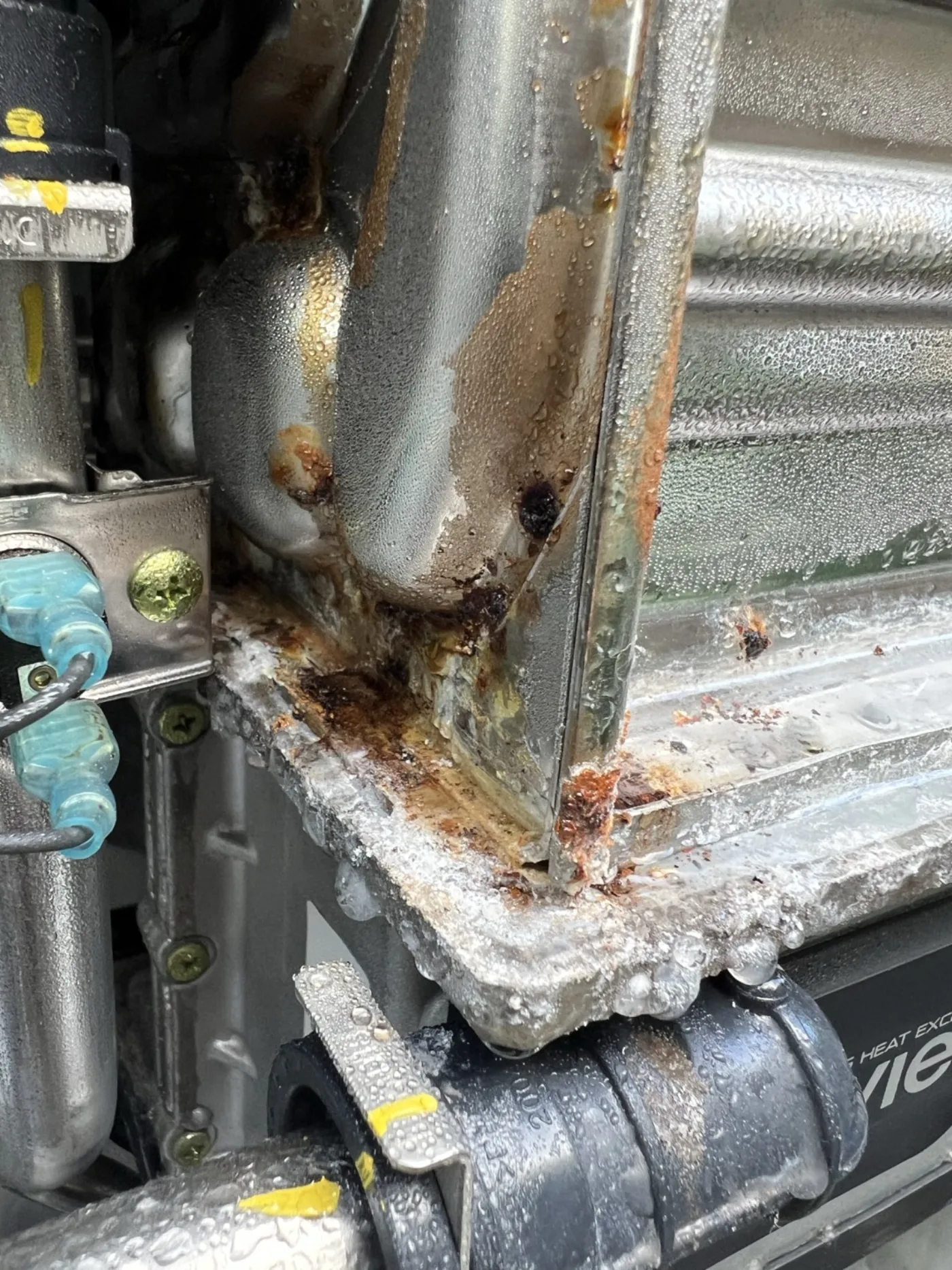
The second valve is on the water heater. On a tank unit it is the cold line coming into the top, usually a lever or a round handle. Closing it stops new water from flowing into the tank, which keeps a leaking heater from emptying your supply onto the floor. Then switch the heater’s breaker off, or turn the gas valve on its supply line to off. Leave the drain valve and the relief lever alone.
Show both valves to everyone who lives in the house. The person at home when something breaks is often not the person who read this page.
A supply line under the sink lets go.
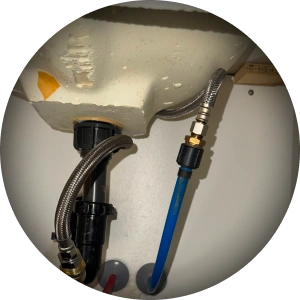
This is the loud one. The braided hose or plastic line feeding a faucet sits under full house pressure all day, and when a crimp fails or a compression nut cracks, water sprays into the cabinet and across the floor fast. Salt air speeds up wear on connections like these, and on older fixtures the fitting usually quits before the pipe does.
Close the two small stops under the sink first. They are the oval handles on the pipes coming out of the wall. If one spins without closing, or the leak is above the stop, go to the main. Then empty the cabinet, leave the doors open so it can dry, and take a few photos.
On our end this is usually fixed on the same visit. We replace the failed line, and often the stops with it, because a valve that has sat unturned for years tends to fail the first time someone needs it. While we are there we check the toilet supply and the other sink, since they are usually the same age.
The toilet or tub is backing up with sewage.
Nobody forgets this call. When sewage comes up in a tub, a shower pan or the lowest toilet in the house, the blockage is downstream of every fixture, so every drain you use now feeds the one that is overflowing. Stop running water everywhere. That includes the washer, the dishwasher, and flushing the toilet to see if it clears.
Keep kids and pets out of the room, and do not try to plunge a line that is coming up in a tub. We clear the main or the lateral, then run a camera down it so you know whether it was a one-time plug or something in an older line, like roots or a settled section, that would bring us back.
What can wait for a scheduled visit.
We would rather tell you the truth on the phone than send a truck for something that keeps. If a valve stops the problem and the rest of the house still has water and working drains, you most likely need a scheduled visit.
A running toilet you can shut off at the wall can wait. So can a single slow drain, a dripping faucet, or a water heater that went cold without leaking. Water you cannot stop is a phone call right away, and so is sewage inside the house or a house with no water at all. If you smell gas, get everyone outside and call from there.
When you call, describe what you see: where the water is, whether it is still moving, and what you already shut off. That tells the plumber what to bring. Send the details here if it can hold for a call back, or reach us at (808) 445-3585.
Why the same house calls twice.
Once the water is off and the floor is drying, the useful question is why that line failed. One burst supply hose is bad luck. A second failure in a different room a few months later is the house telling you something about the age of its plumbing.
If your house is older and still on its original lines, there comes a point where patching one leak at a time stops making sense. When a house gets there, we say so plainly and walk you through what a repipe involves. When it really was one tired part, we fix that part and tell you so. Either way, the number we give you before we start is the one on the bill, and a licensed plumber does the job to code, cleans up and tests everything before leaving.
We also handle drain cleaning in Kailua, leak detection, repiping and water heater installation on the windward side. You can read about our island-wide emergency plumbing, see everything we do in Kailua, or look through recent jobs from around Oahu.
When something breaks on the windward side
What should I do while you drive over from Honolulu?
Close the main shutoff or the valve for the fixture that failed, and switch off the breaker for anything near standing water. Open a low outside faucet to bleed off pressure. Move what you can off the floor and take a few photos. Then keep your phone close so the plumber can reach you on the way.
Where is the main shutoff on a Kailua house?
On many homes it sits near the water meter, in a box set in the ground toward the street, with the house-side valve just past the meter. Some houses also have a valve where the supply comes up along an exterior wall. Find it and test it on a calm day, before you need it.
Which valve do I close on a leaking water heater?
Close the cold supply valve on top of the tank, which stops new water from flowing in. Then turn off the breaker for an electric heater, or turn the gas valve on its supply line to off. Leave the drain valve and the relief lever alone, and call the crew.
The supply line under my sink burst. Can I just close the little valves?
Yes, if they close all the way. The oval handles under the sink shut off that faucet only. If one spins without stopping the water, or the leak is above it, go to the main. Old stops often fail the day they finally get turned, so we usually replace them along with the line.
Sewage is coming up in the tub. What do I stop doing?
Stop using water anywhere in the house, including the washer, the dishwasher and the toilets. Every gallon has to go somewhere, and right now it comes out the lowest drain. Keep people and pets out of the room. We clear the line, then camera it to see what caused the backup.
How do I know if it can wait for a scheduled visit?
If a valve stops the problem and the rest of the house has water and working drains, it can usually wait. A running toilet, one slow drain or a heater that went cold without leaking are scheduled visits. Water you cannot stop, sewage inside the house or no water at all should be a phone call right away.
Schedule
Under control? Send it here
Water on the floor right now is a phone call. For anything a valve has under control, give us the details and we will reach out to set up a visit in Kailua.