
Switching to a Gas Range: What Running the Line Involves
The range is the easy part. The real work is making sure there is enough gas for it along with everything else on the line, getting pipe to the kitchen by a sensible route, and finishing with a reachable shutoff, a new connector and a pressure test the inspector can see.
People who grew up cooking on gas tend to miss it within a week of using an electric coil. We get the call when someone in Maunawili or Kailua town has picked out a range and wants to know what it takes to hook it up. Sometimes it is a gas dryer instead, or a tankless heater going on an outside wall, and the questions are nearly the same.
Start with what gas the house already has
First question: is there gas at the property now, and what kind. Some homes are on a utility gas line with a meter. Others run from a propane tank in the yard. Some have no gas at all. Each answer sets up a different job.
If gas already feeds a water heater or dryer, we trace where that pipe runs and how big it is. If the house is on propane, the tank and the regulator matter as much as the pipe. If there is nothing yet, getting service to the house comes before any of our work inside, which means talking with your gas provider before a delivery date for the range gets set.
The range matters too. Ranges ship set up for one type of gas and use a conversion kit for the other, so settle the fuel before you buy, and have the conversion done to the manufacturer’s instructions.
Sizing the pipe for every appliance on it
Gas pipe is sized by how much fuel everything downstream can burn at once and how far that fuel has to travel. Every appliance lists a BTU rating on its label. A water heater, a dryer and a range all firing together add up, and the pipe has to carry that total over the full run without pressure falling off at the far end.
This is where add-ons go wrong. A line that fed a water heater comfortably may be too small once a six-burner range hangs off the end of it. The signs are lazy yellow flames, burners that will not hold a low simmer, or a heater that struggles every time dinner is cooking. Turning something up does not fix it. A correctly sized line does.
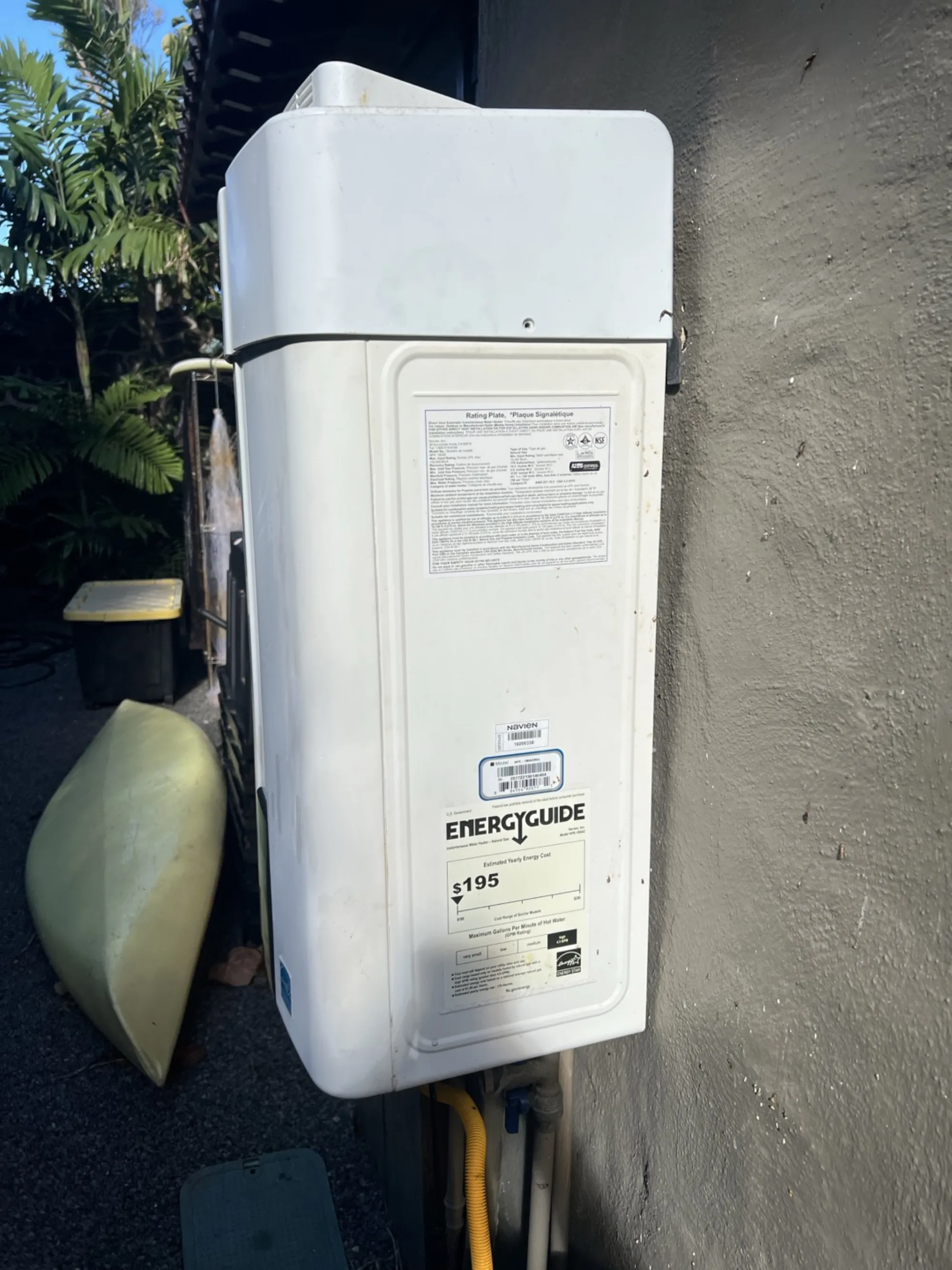
So we add up the ratings, measure the run and size from there. Sometimes the existing pipe works as is. Sometimes a new branch goes back toward the meter or the tank. If a new water heater is part of the same plan, our Kailua water heater installation page covers the tank and tankless side.
Getting pipe from the source to the kitchen
Route is where most of the labor lives. On a raised house with space underneath, pipe can often run below and come up through the floor behind the range. On a slab, it usually runs through the attic and down an interior wall, or along the outside of the house and in through the wall behind the kitchen. We pick the shortest path that stays protected and can be serviced later.
Material follows the route. Black steel pipe is sturdy and common on exposed runs. Corrugated stainless tubing in a yellow jacket bends around framing with fewer joints, which helps inside finished walls, and it needs proper bonding when it goes in. Pipe that runs outside gets protected from the weather, and near the ocean that matters more, since salt air works on exposed connections.
If walls are already open for a remodel, this step gets much easier. Tell us early.

The valve and connector behind the range
At the appliance, the line ends in a manual shutoff valve you can reach by sliding the range out. That valve lets you, or the next plumber, isolate the range without shutting down the water heater and everything else. We place it where it will not get crushed when the range pushes back against the wall.
Between that valve and the range goes a flexible appliance connector. It should be new, rated for the appliance, and the right length: long enough to pull the range out for cleaning, short enough that it does not kink behind it. An old connector from a previous stove does not get reused. Those were never made to be bent back and forth and reinstalled, and that fitting is the last one you want to fail.
Connectors do not pass through walls, floors or cabinet sides. Rigid pipe does that job, and the connector only covers the short gap at the end.
Pressure test, permit and the first flame
New gas piping gets a pressure test before any wall closes and before the appliance is hooked up. The line is capped, pressurized and watched on a gauge to confirm it holds. Gas work is permitted work, and the inspector wants to see that test and the piping. We pull the permit as part of the job, so it runs on our schedule instead of yours.
Once it passes, we connect the range, open the valve and check every joint we made with leak solution. Then we light each burner and the oven and watch the flames. Blue and steady is right. Yellow, lifting or noisy flames get sorted out before we leave. It is also a good moment to make sure the range hood actually vents the kitchen.
If you ever smell gas afterward, leave the house, call the gas provider from outside, then call us. Our gas line installation and gas line repair pages cover both sides of that work.
Gas line questions
Can a gas range go where my electric range is now?
In most kitchens, yes. We bring a gas line and shutoff to the same spot, and an electrician deals with the old range circuit. The gas range still needs a regular outlet for its igniters and clock, so check that one is there.
Can I add a range to the line my water heater uses?
Sometimes. It depends on the pipe size, the length of the run and the combined rating of everything on it. We add those up before promising anything, because an undersized line shows up as weak burners and a struggling heater.
Should the gas line go in before the new range arrives?
Yes. Have the line run, tested and inspected first, so delivery day is just a hookup. A new range sitting in the garage waiting on a gas line is a common delay, and an easy one to avoid.
A gas range is a good upgrade and a simple hookup once the line behind it is right. Most of the work is sizing and routing, and both are easy to plan ahead of the appliance. Before you pick a delivery date, you are welcome to browse photos from past jobs.
Going gas in Kailua?
Send us the range model and a photo of where it goes. We will check what gas the house has, size the line and show you the route it would take.