
One Clogged Drain or the Main Line? How to Tell
One slow drain is a clog near that fixture. Several slow drains in different rooms, water coming up in a tub or floor drain when the washer empties, or gurgling all over the house points to the main line. Skip the chemicals on a main line problem and call.
Before you reach for a plunger or a bottle of drain opener, walk through the house and run a little water in every sink, tub and shower. Those few minutes tell you most of what you need to know.
A slow bathroom sink while everything else drains fine is one kind of problem. A kitchen sink, a tub and a toilet all acting up in the same week is a very different one, and treating it like the first kind usually wastes a day and a bottle of chemicals.
Count the slow drains
A clog that affects one fixture lives in that fixture’s own branch line, somewhere between the drain opening and the spot where it joins a bigger pipe. Bathroom sinks collect hair and soap. Showers collect more hair. Kitchen sinks collect grease and bits of food. When only one drain is slow, the blockage is almost always close to it.
When two fixtures that share a branch are slow together, like the sink and tub in one bathroom, the clog sits farther along where their lines meet. When drains in different parts of the house slow down at the same time, the trouble is in the pipe they all empty into, the main line.
Toilets are a special case. A single toilet that will not flush down usually has something stuck in its own bowl or trap and nothing wrong further along.
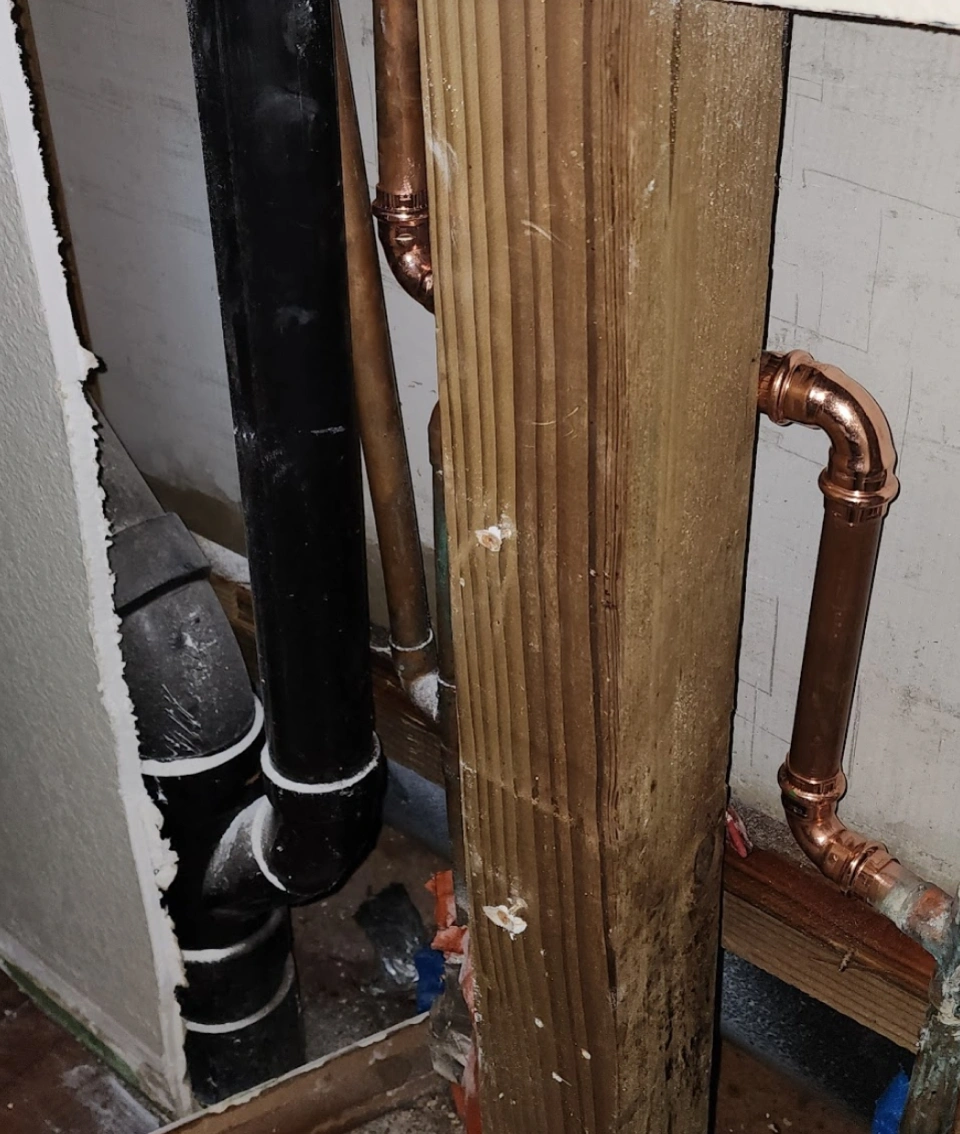
Watch what happens when the washer drains
The main line gets tested hardest when a lot of water goes down at once. A washing machine pumping out, or a toilet flushing, sends a big rush of water toward the main. If the main is partly blocked, that water has nowhere to go.
So pay attention right after a load drains or someone flushes. Water rising in a tub or shower, bubbles coming up through a floor drain, or the toilet bowl filling back up while the washer runs all mean water is backing up from the main and looking for the lowest opening in the house.
That lowest opening overflows first. If a ground-floor shower fills with dirty water when the washer empties, the shower is only where the problem is showing up.
One look-alike to rule out: water spilling out of the washer’s own standpipe while every other drain in the house behaves. That usually means the laundry branch is clogged with lint, or the standpipe is too short for the machine’s pump, and neither one involves the main.
Gurgling, and what it tells you
A drain gurgles when air is being pulled through a trap because water cannot flow past something freely. One gurgling sink beside a slow tub in the same room points to a branch clog. Gurgling from several fixtures while the washer drains points at the main.
Notice smells too. A main that is backing up can push sewer odor out of drains that never smelled before. Put that together with slow drains around the house and you are almost certainly looking at the main.
We see this pattern a lot in Pearl City, where established neighborhoods are full of homes lived in for decades. Years of use leave buildup along the inside of older lines until one small snag starts catching everything that comes down behind it.
Store chemicals are the wrong tool here
Drain chemicals are made to eat through hair and soap scum sitting near the drain opening. Poured onto a main line blockage, they sit in standing water, never reach the clog and never clear it. Now the pipe is full of caustic water.
That water becomes a hazard for whoever opens the line next, whether that is you with a plunger or us at the cleanout. It can burn skin and eyes. Some products get hot enough to soften plastic drain pipe, and repeated doses are rough on older metal lines as well.
For a slow single drain, try the plain tools first. Pull the stopper on a bathroom sink and clean the hair off it, or use a plastic hair tool in a shower drain. Hot water and a plunger handle plenty of kitchen and toilet clogs. If those do not move it, the clog is deeper than a bottle will reach anyway.
If you already poured something in, tell us what it was when you call. We will take the right precautions before we open anything.
How we clear it, look inside and decide on jetting
For a single fixture, we clear the branch and make sure it drains at full speed before we leave. For a main line, we usually go in through a cleanout, an access fitting on the main, and run a cable through the blockage so the house drains again.
If the main keeps clogging, or what comes back on the cable hints at roots, broken pipe or heavy buildup, the next step is a camera down the line so we can see the cause and stop guessing. Heavy buildup that a cable only punches a hole through is a job for hydro jetting, which scours the pipe walls clean with high-pressure water. Cracked or collapsed pipe calls for sewer line repair.
Our Pearl City drain cleaning page has more on clearing and jetting. If sewage is already coming up into a tub or floor drain, the Pearl City emergency plumbing page covers what to do first. Past drain and repair work is in our gallery.
Clog or main line questions
Can I snake a main line clog myself?
A small hand snake rarely reaches a main line blockage, and opening a cleanout on a backed-up line can release a lot of dirty water at once. If several drains are slow, let us handle it.
How do I find out if my house has a cleanout?
It is usually a capped pipe outside near the house, or in a crawlspace or garage. On the first visit we find yours and show you where it is, so you know for next time.
Will the clog come back after you clear it?
A single hair clog may not return for years. A main that clogs more than once usually has a reason, such as buildup, roots or a low spot in the line, and that is when we recommend a camera to find it.
If one drain is slow, you likely have a simple fix and some time. If the house is pushing water up through its lowest drain, stop running water, leave the chemicals on the shelf and call us.
More than one drain acting up?
Send us the list: which drains are slow and what happens when the washer runs. We will come ready for a main line if that is what it sounds like.