
Kaneohe Shower Valves, Set Before the Tile Goes Up
Remodeling or adding a bathroom? While the wall is open, we set the valve, the diverter and the handheld outlet at the right depth and height, then pressure test the whole rough-in before anyone tiles.
Timing
An open wall is the easy time to get the valve right.
Once the tile is on, every change to a shower valve means cutting into finished work. Before that, it means moving a few fittings. That is why we want the shower decisions made while the room is still open to the studs, whether it is a full remodel or a new bathroom in an addition.
There are five of them, and none is hard:
- Which kind of valve.
- Whether you want a handheld.
- How deep the valve sits in the wall.
- How high everything goes.
- Which trim you are buying.
Settle those and the rough-in goes in once. Leave them open and somebody ends up back inside that wall later.
We work alongside your general contractor and tile setter so the order of work lines up, and we are glad to walk it through with you at the house. If a new water heater is part of the project, tell us early, since tankless installation and the shower valve affect each other. A heater that already swings between hot and cold is its own problem, and our tankless repair page explains why. The bigger picture of our shower valve installation work across Oahu has a page of its own.
Pressure-balance or thermostatic, in plain words.
A pressure-balance valve watches the balance between the hot and cold supply. When someone flushes a toilet and the cold pressure dips, it pulls back the hot to match, so nobody in the shower gets scalded. One handle usually runs both temperature and on and off. For most bathrooms it is the sensible pick.
A thermostatic valve holds a temperature you set and keeps it there as pressures shift, and it often gives volume a separate control. It suits a household that wants the same temperature every morning, or a shower with several outlets running at once. Both are good valves. We explain the difference standing in your bathroom and let you choose.
Whichever you pick, ask for a valve with built-in stops, small shutoffs inside the valve body. Years from now they let a plumber change a cartridge without turning off water to the whole house.
Adding a handheld means adding a diverter.
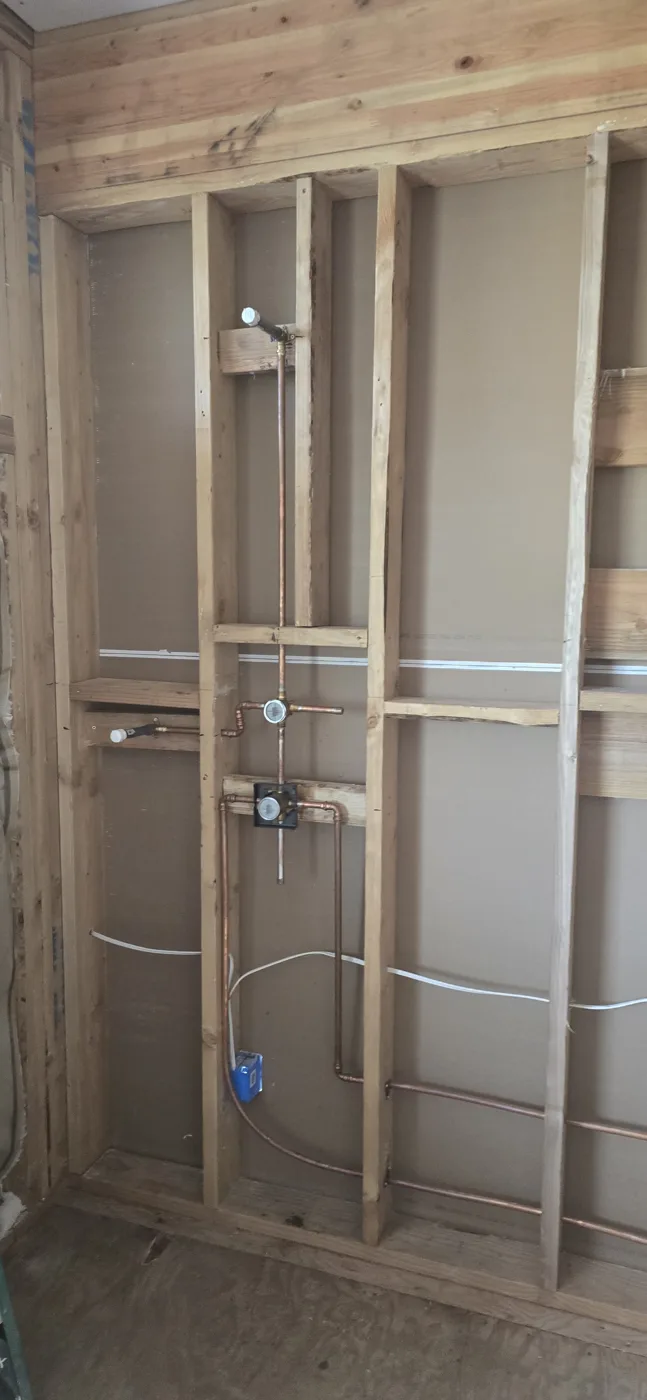
The rough-in in the photo is a good example of a shower planned for a handheld. There is a mixing valve, a diverter valve above it, a riser up to the showerhead stub, and a separate outlet for the hose that will feed a handheld on a slide bar.
The diverter sends water to the fixed head, to the handheld, or on some models to both. A slide bar lets a child, a tall adult and someone sitting down all use one handheld at their own height, and it makes rinsing the tile far easier. If you think you might want one in a few years, rough it in now. Adding a diverter and outlet later means opening the wall again.
Depth
Depth and height, measured to the finished wall.
Every valve body has a range of depth it can sit at and still let the trim seal against the wall. That range is measured from the finished tile face, so we need to know what goes on the studs: backer board, waterproofing, the setting bed and the tile itself. A thick stone tile and a thin ceramic one put the face of the wall in different places.
Set the valve too deep and the handle stem comes up short. Set it too shallow and the trim plate stands off the tile with a gap around it. We check the plaster guard or the depth marks on the valve against your actual wall build before anything gets fastened.
Heights are personal, so we ask who uses the shower. The valve goes where you can reach it comfortably, the showerhead stub goes high enough for the tallest person in the house, and the slide bar sits where the shortest can still grab the handheld. Decide on any grab bar now as well, so the framer can add blocking behind it.
Testing
Caps on and a gauge on before anyone tiles.
When the rough-in is finished, we put test caps on the showerhead and handheld outlets and pressurize the lines. Then we watch the gauge. A joint that weeps under test is an easy fix while the wall is open, and a tear-out once it is tiled over.
Nobody closes the wall until the gauge holds.
We also check that the valve sits plumb and level, that the stub-outs come straight out of the wall, and that the plaster guard stays on so mortar and grout never reach the cartridge. Then we let your tile setter know the wall is clear to close.
Established Kaneohe homes sometimes hide a second question behind the first. When the new valve ties into older supply pipe, the test also shows whether those aging lines can hold pressure. If they cannot, you hear about it while the wall is still open and swapping them is simple.
Choose the trim before we rough it in.
A shower valve body and its trim come from the same manufacturer, and usually from the same product line within that brand. The handle and plate you liked in a catalog will not fit a valve made by another company. So we ask for the trim model before rough-in, then install the body that matches it.
Ordering the trim early also means it arrives before the tile setter finishes, so the new shower is not sitting unusable while a part ships. If you have not picked one yet, tell us the look you want and we will help you narrow it down.
You get a clear price for the rough-in before we start, and it holds. Photos from past bathrooms are in our gallery, and our Kaneohe service page covers the rest of what we do on this side of the island. Living with an old valve and no plans to open the wall? That is shower valve replacement, a different job. Planning the whole room? Start with bathroom plumbing for a Kaneohe remodel, then get in touch to set a time.
Frequently asked questions
What is the difference between a pressure-balance and a thermostatic valve?
A pressure-balance valve reacts when the hot or cold pressure drops, such as when a toilet flushes, and keeps the mix from scalding you. A thermostatic valve holds the exact temperature you set and often gives volume its own control. Pressure-balance suits most bathrooms. Thermostatic suits people who want finer control.
Can I add a handheld shower to a new valve?
Yes, and an open wall is the time to do it. A handheld needs a diverter, or a valve with one built in, plus its own outlet in the wall for the hose. We rough those in with the main valve so the slide bar and handheld go on with the rest of the trim.
Why does valve depth matter so much?
The trim only seals, and the handle only reaches the stem, if the valve body sits inside its depth range measured from the finished tile face. Backer board, waterproofing and tile thickness all move that face. Too deep or too shallow and you need extension kits, or you live with a gap.
How high should the showerhead and valve be?
There is no single right height, so we ask who will use the shower. The showerhead stub goes high enough for the tallest person, the valve goes where it is easy to reach, and a slide bar lets shorter family members or someone seated use the handheld comfortably.
Do you test the valve before the wall gets closed?
Every time. We cap the outlets, pressurize the lines and watch the gauge before we tell the tile setter to start. Finding a weeping joint at that stage is simple. Finding it after the tile is set means cutting into a finished wall, and nobody wants that.
Do I need to choose my trim before rough-in?
Yes. The valve body has to come from the same manufacturer, and usually the same product line, as the trim, or the handle and plate will not fit. Pick the trim first and we install the matching body. Ordering early also keeps the finished shower from sitting idle while a part ships.
Tell us where the remodel stands
Framing done, or still picking tile? Send what you have and we will reach out to walk the wall with you in Kaneohe. Or call (808) 445-3585 and talk it through with John’s crew.