
Waipahu Leaks, Found First and Fixed Small
A brown ring on the ceiling, or a water bill that jumped for no reason. We trace the leak to its source with detection tools before anything gets cut, then open only what the repair needs. You hear where we plan to cut before we do it.
Detection
Pin down the source, then make the smallest opening.
Most hidden leaks have been running for a while before anyone notices them. By the time a stain shows on the drywall or the bill climbs, the water has often traveled along a pipe or a stud and surfaced somewhere other than where it started. Cutting the wall open right at the stain is a guess, and guesses turn one hole into four.
So we locate the source first. Detection tools let us narrow a leak down from outside the wall, floor or ceiling before anything comes apart. The repair stays small, the mess stays small, and your money goes into fixing the leak instead of hunting for it. When a leak is hard to reach or the house has a history of them, our leak detection service is where the job begins.
Waipahu has a lot of established homes dating back to its plantation-town days, and many still carry their original supply lines inside the walls. Pipe that old tends to give out at the same kinds of spots, which helps us look in the right place sooner.
Three repairs we make once the wall is open.
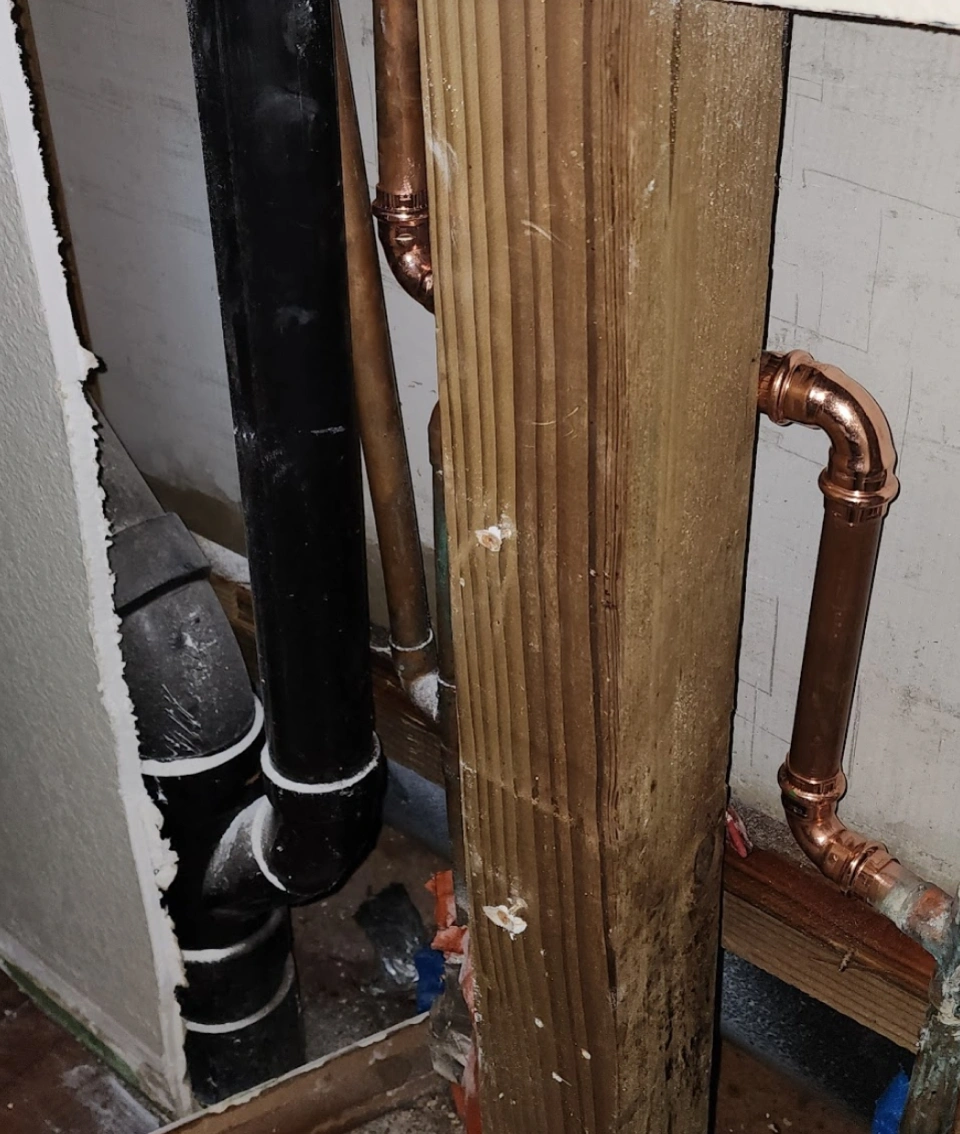
The photo up top shows what we often find behind the board: a black drain stack on one side of a stud and copper supply line with two elbows on the other. Most wall leaks in a setup like that come from one of three places.
A pinhole in copper supply
Old copper can wear through from the inside and spray a fine mist into the cavity. We cut out the damaged length, splice in new pipe with fresh fittings, and put the line back under pressure.
A weeping fitting
An elbow or coupling that seeps at the joint can soak a wall slowly for months. We remake that joint or replace the fitting, and we check the fittings on either side of it while we are there.
A cracked drain joint
Drain leaks only show while water is flowing, which makes them easy to miss. A cracked joint on the stack gets cut out and replaced with matching pipe. Then we run water and watch it.
No repair is called done until it has been tested and the wall cavity is dry.
Repipe
When patching one leak at a time stops making sense.
A single pinhole in a line that is otherwise sound is a repair. Three pinholes in a year on the same run of pipe is a pattern. Once a supply line starts failing in more than one spot, fixing it one leak at a time costs you more in visits, drywall and worry than replacing the line would.
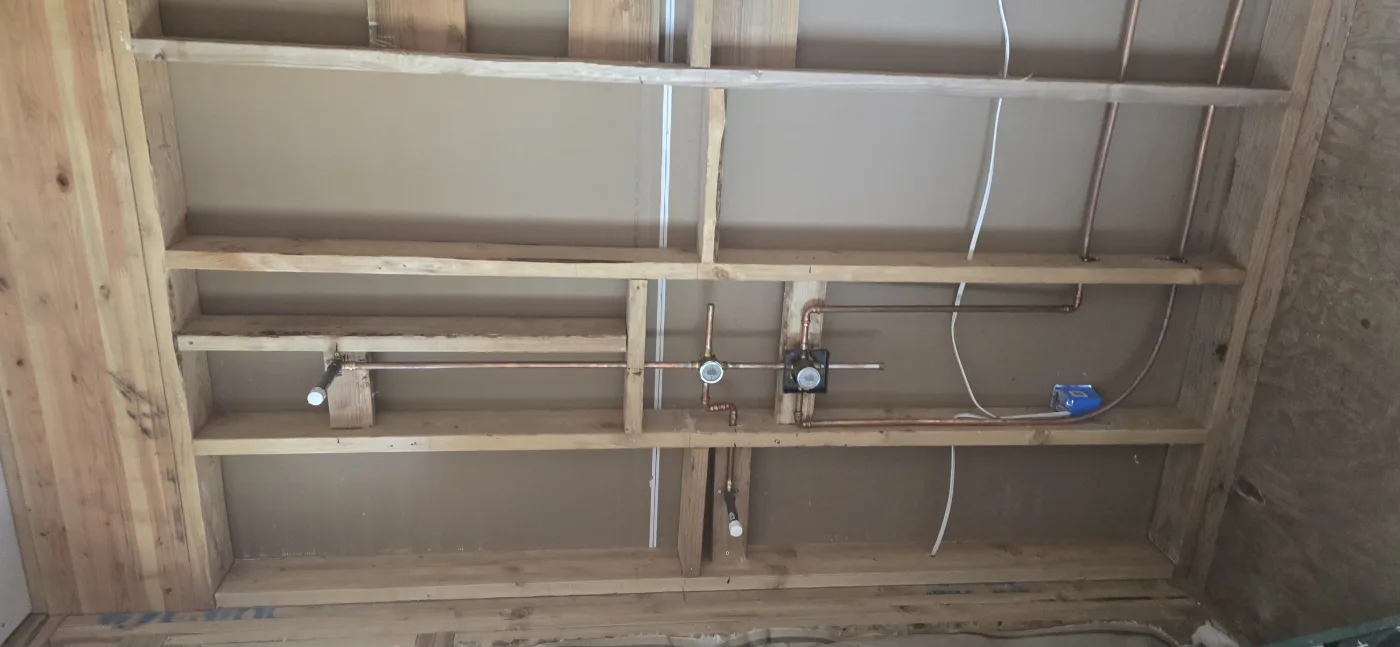
While the wall is open, we look at the pipe on both sides of the leak. If the copper is thin, pitted or green at the joints, or old galvanized pipe is closing up with rust, we show you what we see and explain what a repipe would involve. Supply lines like the ones in this photo run cleanly through the studs and take the old weak points out of the house.
If the line is in good shape, we fix the leak and tell you the rest can stay. That decision is yours, and you get our straight read before you make it.
Talk to the crew: (808) 445-3585Who closes the wall after the pipe is fixed.
We are plumbers, so our part is the pipe. Before we open anything, we tell you where we plan to cut and roughly how big the hole will be. We cut cleanly so the patch is easier for whoever finishes it, and when the repair is done we leave the opening neat and the room swept.
Patching the drywall, retexturing, painting and any tile work are your call or your contractor’s job. Some homeowners have a handyman they trust. Some would rather do it themselves. Some are already planning a remodel and want the wall left open a little longer. We are glad to leave the opening in whatever state works for the next person in line.
Most of the time the rest of the house keeps its water while we work. We shut off the branch we are repairing, or the main for a short stretch when there is no closer valve, and we tell you before the water goes off. If a repair has to wait on a fitting or a length of pipe, we cap the damaged section so nothing keeps running into the wall, and we come back with the part. Where a line has no shutoff of its own, we can add one while the wall is open, so the next repair on that line stays smaller.
If the leak has soaked insulation, flooring or a cabinet base, we point that out too, so you can decide whether it needs drying or replacing. The one thing we will not do is close up a wall over pipe that has not been tested.
Early signs worth a call before the stain spreads.
The first clue is rarely water you can see. These are the signs worth a call:
- A water bill that jumps while the household uses water the same as always
- A brown ring or soft spot on a ceiling or lower wall
- Paint that bubbles or baseboard that swells
- A musty smell in one room or closet that never clears
- Water moving in the pipes with every faucet shut
A quick test you can run yourself: turn off everything that uses water and watch the meter for a few minutes. If the dial creeps, water is going somewhere it should not. Call, or tell us what you saw in a message. If the leak is active and you know where your main shutoff is, close it first.
Our island-wide leak repair page covers more of the repair work we handle across Oahu, and the job gallery shows recent work.
Elsewhere in Waipahu the crew handles water heater repair, plumbing inspections, shower valve repair and new construction plumbing. See the Waipahu page for the full list, or send us the details of the leak.
What Waipahu homeowners ask about leaks
Do you have to open the wall to fix a hidden leak?
Usually, yes, but once and in the right spot. We find the source with detection tools first, so the opening lands right over the problem. Before we start, we tell you where we plan to cut and about how big the opening will be.
Will you patch the drywall afterward?
Our part is the plumbing. We repair and test the pipe, leave a clean opening and tidy the work area. Patching, texture and paint are up to you or your contractor, and we can leave the opening however suits whoever finishes it.
How can I tell if I have a hidden leak?
Watch for a water bill that rises for no reason, stains or soft spots on walls and ceilings, bubbling paint, or a musty smell that lingers. Then turn off every fixture and check the water meter. If it keeps moving, water is escaping somewhere.
Should I fix this leak or repipe the house?
One leak in otherwise healthy pipe is a repair. Repeated leaks on the same aging line usually mean the pipe is wearing out, and paying for one patch after another rarely works out. We show you the condition of the pipe and give you our honest read.
Can you fix a leaking drain pipe?
Yes. Drain leaks only show up while water is running, so they can hide for a long time. We find the cracked joint or fitting, cut it out, replace it with matching pipe, then run water through it to make sure the new joint stays dry.
What should I do if water is leaking right now?
Shut off the main if you can find it, then call (808) 445-3585. Active leaks and burst pipes go to the front of the line. We will give you a real timeframe for reaching your Waipahu home and talk you through what to do until we arrive.
Start your fix
Describe the leak and where it shows
Tell us what you are seeing, which room it is in, and how long it has been going on. A photo of the stain helps. We will reach out to set a time to come track it down, or call the crew at (808) 445-3585 if water is moving now.